
Desk story / Big Wins
How to Adjust Your Poker Game When Stakes Change
A player moves from 1/2 to 5/10 poker. The game looks the same. The psychology is entirely different. Most players never adjust and lose steadily.
- Filed
- Byline
- Jerry Boyd
- Length
- 680 words, about 3 minutes
- Copy ID
- SM365-62590A84
I worked fraud cases where the method was always the same: a person succeeds at small scale, assumes they can succeed at large scale, and gets destroyed.
Poker stakes work the same way.
A player wins money at 1/2 stakes. They are successful. They beat the game. They move to 5/10 stakes. They use the same strategy that worked at 1/2.
They lose. Fast.
The reason is not complicated: stakes change everything.
What Changes
At 1/2 stakes (small blind $1, big blind $2), an average player might win $20-50 per hour. The swings are moderate. A bad night is losing $100. A good night is winning $200.
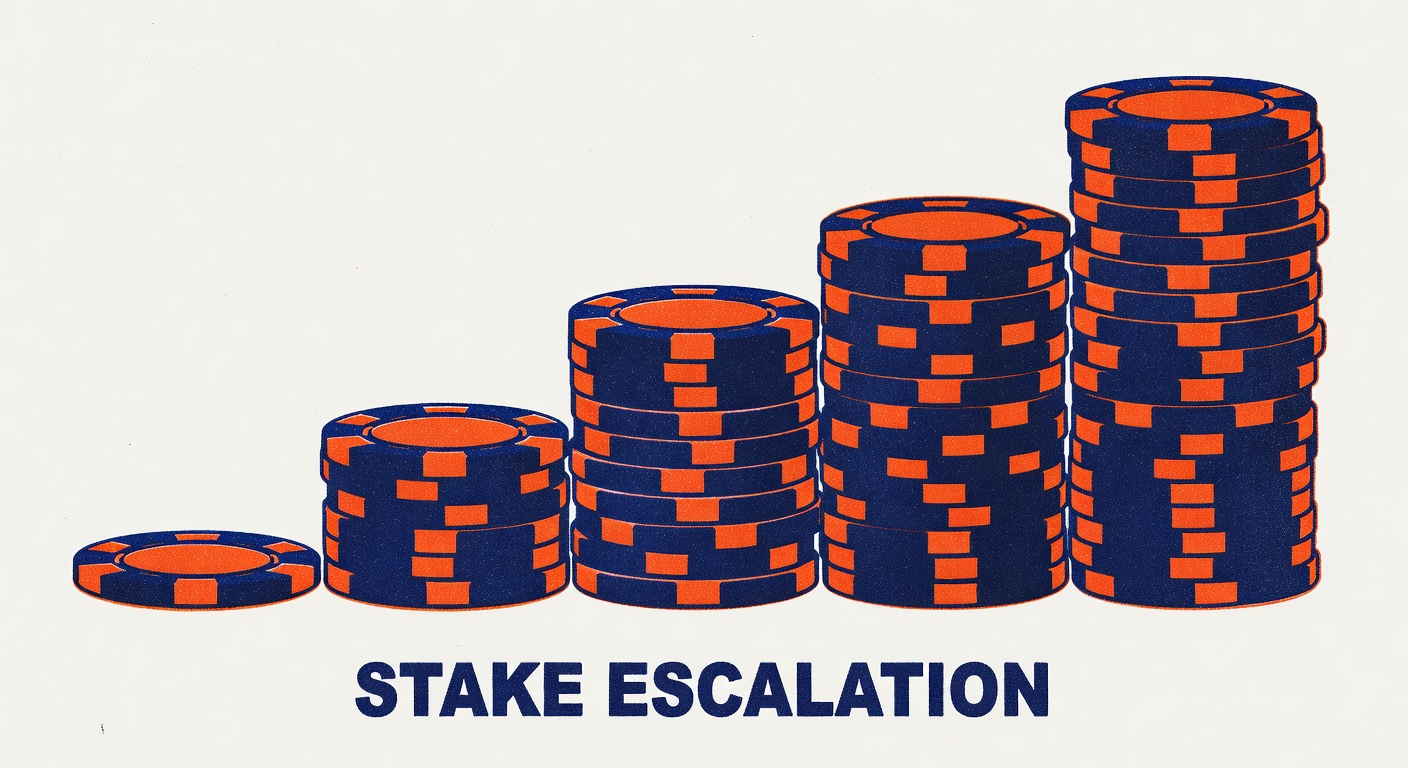
At 5/10 stakes, the swings are five times larger. A bad night is losing $500. A good night is winning $1000.
This larger variance changes player behavior. Everyone becomes more careful. Everyone thinks more about each decision. The game becomes tighter.
More importantly, the population changes. At 1/2, you have casual players grinding trying to build a bankroll. At 5/10, you have experienced players who have already built bankrolls. They know how to play.
The Adjustment Process
When you move up in stakes, you should expect to lose while you adjust. Most players do not plan for this. They expect to immediately beat the higher stakes the same way they beat the lower stakes.
The first adjustment: hand selection becomes more critical. At 1/2, you can play looser because the downside is small. At 5/10, loose play is expensive.
The second adjustment: position becomes more critical. At 1/2, position matters but weak players do not exploit positional advantage. At 5/10, position is weaponized.
The third adjustment: bluffing becomes riskier. At 1/2, you can bluff frequently because if you get called, you lose small money. At 5/10, a bad bluff costs real money.
The fourth adjustment: bankroll management becomes existential. At 1/2, a bad session is recoverable in an evening. At 5/10, a bad session might require a week of work at a day job to recover.
The Psychological Shift
Here is what I saw in fraud cases: people's judgment changes when the stakes change. A person who is careful with small money becomes reckless with large money, or vice versa.
The same thing happens in poker. A player who was disciplined at 1/2 might become either overly cautious or reckless at 5/10.
Overcaution manifests as playing too tight. The player folds hands they should play because they are afraid of losing. This turns them into an easy target for aggressive opponents.
Recklessness manifests as playing too loose. The player thinks they can out-think better competition and gets punished.
Neither approach works. The correct approach is to adjust gradually while maintaining the discipline that made you successful at lower stakes.
The Timeline
A competent player moving up should expect 50-100 hours of play before they equilibrate to the new stakes. During this time, they will likely lose money. This is expected.
The question is: can you afford to lose while you adjust? If you cannot afford to lose 5-10 buy-ins at the new stakes, you should not move up.
Most players move up before they are financially ready. They beat the lower stakes for a few months, feel confident, and jump up. They lose quickly and have to move back down.
The players who move up successfully are the ones who move up slowly and move back down if the adjustment is not working.
The Real Tell
A player who has moved up in stakes but still thinks like a player at lower stakes will self-identify very quickly. They will say things like:
"The game was soft at 5/10." "I just ran bad, I should have beaten the game." "These players are too aggressive, I will adjust next time."
None of these statements acknowledge that the player has not adjusted. The game at 5/10 is not soft. The player ran bad and also has not made the mental adjustments necessary to compete.
The adjustment is real and it is difficult. Most players who move up ultimately move back down because they never complete it.