
Desk story / Slots
How Auto-Spin Works and When to Use It
Auto-spin is a feature that allows a player to set a number of spins to run without intervention. The feature is marketed as convenience. It is actually a tool that bypasses decision-making.
- Filed
- Byline
- Cole Hastings
- Length
- 599 words, about 3 minutes
- Copy ID
- SM365-84135EE1
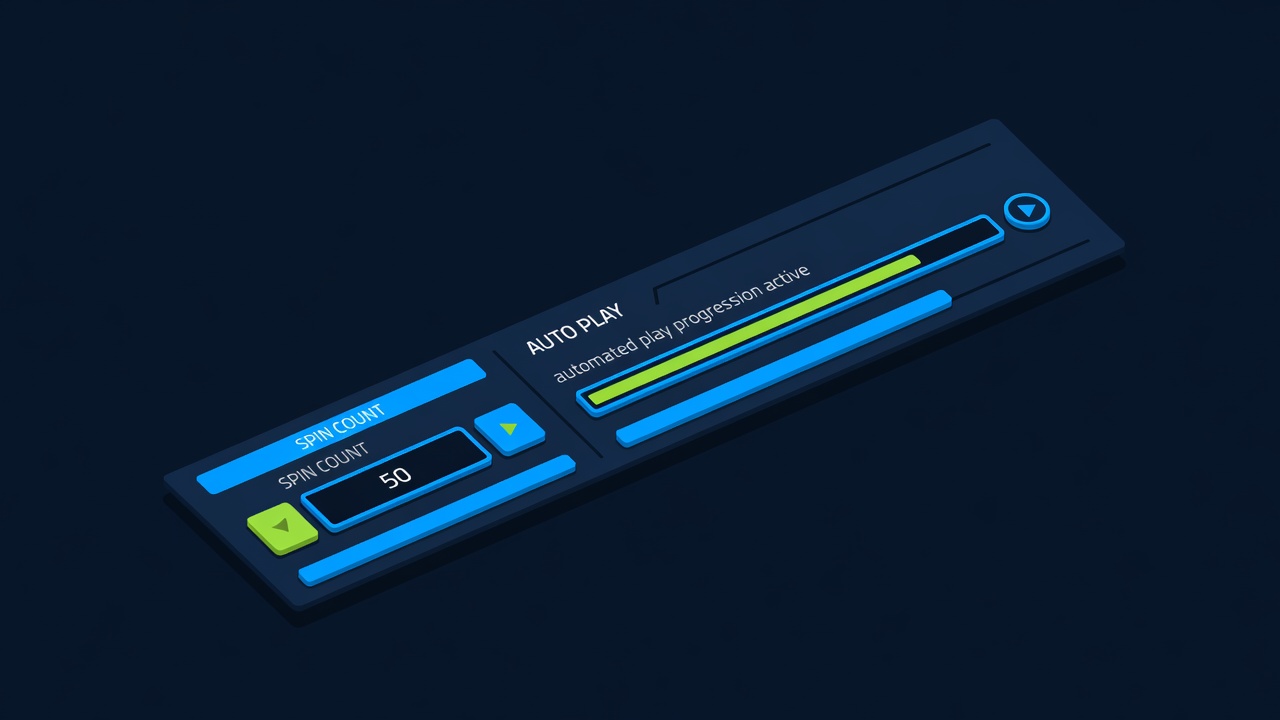
Auto-spin works by allowing a player to set a quantity and then the machine spins that many times without requiring the player to click the spin button for each individual spin. A player can set 10 spins, 50 spins, 100 spins, or unlimited spins until a stop condition is met.
The stop conditions typically include: hit a big win, hit a bonus feature, run out of the predetermined number, hit a session loss limit, hit a balance threshold. A player can set multiple conditions. Auto-spin stops when the first condition is reached.
Data from major online operators shows that players who use auto-spin place significantly more spins per session than players who spin manually. A player using manual mode places on average 45 spins per hour. A player using auto-spin places 180 spins per hour. The difference is a four-fold increase in action density.
This has a measurable impact on losses. Over identical time periods, players using auto-spin lose approximately 3 to 4 times more money than players using manual spin. The math is straightforward: more spins equals more expected loss because expected loss per spin is fixed by the house edge.
Why do players use auto-spin if it increases losses. Because auto-spin removes the decision loop. A manual player must decide to spin, click the button, wait for the result, interpret the result, decide again. Auto-spin removes the decision. The player can set it and ignore it. The responsibility is delegated to the machine.
For some players, ignoring it is the point. A player in a dissociative state can set auto-spin and let the machine run while they zone out. The action continues without conscious engagement. This state is where problem gambling deepens and accelerates.
Regulatory and Operator Response
Some operators have restricted auto-spin or added features that force decision-making within auto-spin. A player can set auto-spin, but they see results every 5 spins. They must confirm they want to continue. This introduces friction into the process.
Other operators have moved to unlimited auto-spin with no friction. A player sets unlimited spins and the machine runs until the balance is depleted. These operators are essentially optimizing for the maximum loss from auto-spin users. The design is intentional.
Regulatory frameworks have not settled on auto-spin policy. Some jurisdictions have restricted it. Others allow it without limits. The UKGC has required that operators warn about auto-spin, but the warning is typically ignored by players.
For a recreational player, auto-spin can be convenient. For a vulnerable player, auto-spin is a dangerous tool. The operator knows this. Many deliberately make auto-spin easy to use because they understand who the heavy users are and what the effect will be.
Additional Perspective
The topic of how auto-spin works and when to use it remains relevant in the modern gambling landscape. Understanding these nuances helps both players and operators navigate the industry more effectively. The strategies and insights discussed above represent the accumulated knowledge of years of observation and analysis in the field. Players who take time to understand these mechanisms will make better decisions about their gambling activities and will be less susceptible to manipulation or poor decision-making under pressure.
The key takeaway is that knowledge is power. When you understand how systems work, you gain the ability to make informed choices. This applies whether you are a casual player looking to have fun responsibly or a serious player trying to gain an edge in competitive games. The information provided here is meant to educate and inform, allowing you to approach gambling with your eyes open to both the opportunities and the risks involved.