
Desk story / History
Top Egyptian-Themed Slots and Why the Theme Never Dies
The pyramids shimmer on the screen. They have done so for two decades in slot machines, and they will continue to shimmer long after we are gone. There is something in the human heart that keeps returning to that desert, that mystery.
- Filed
- Byline
- Bri Sutton
- Length
- 713 words, about 4 minutes
- Copy ID
- SM365-6BBDD8FE
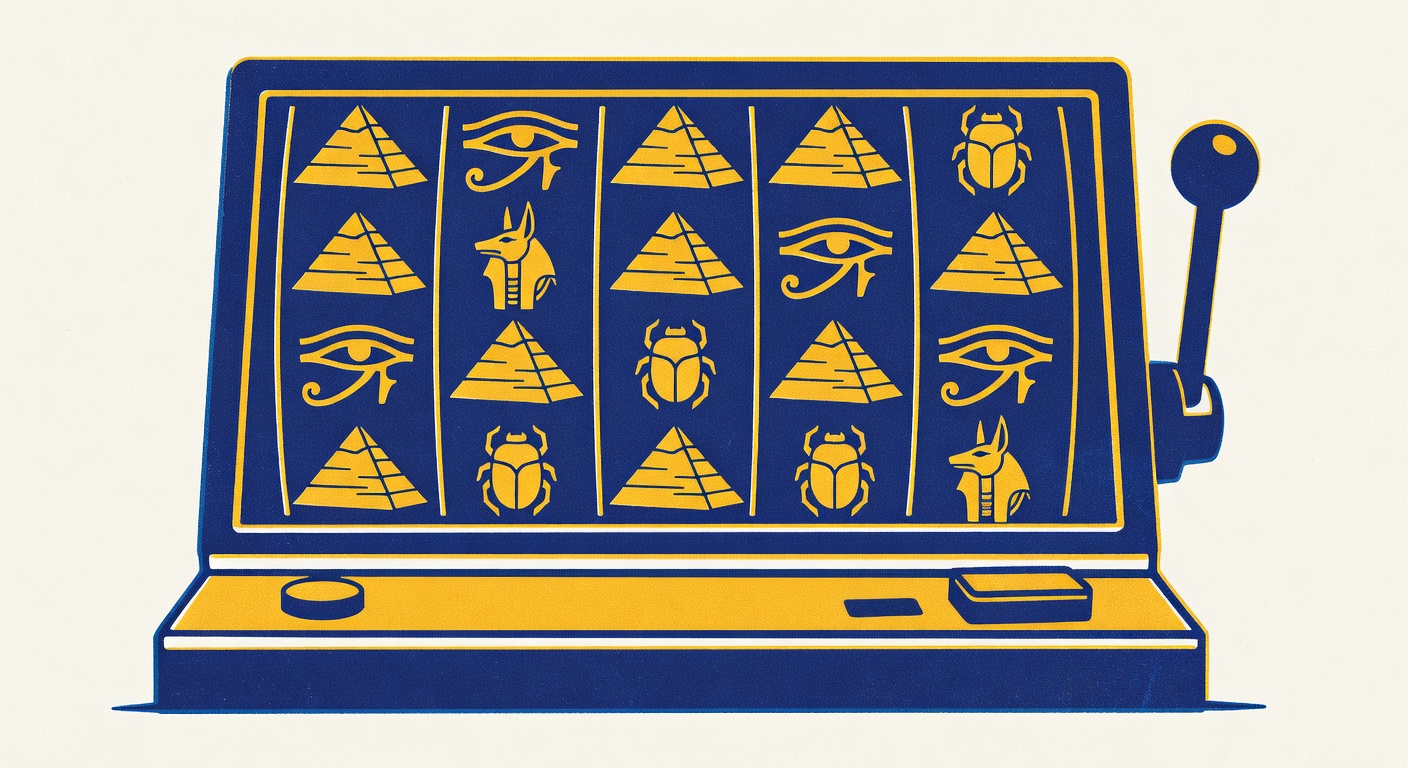
Walk into a casino floor on a Tuesday afternoon. You will find someone, maybe a grandmother from Reno, pulling the handle on a machine with Anubis on the side. The gold accents catch the light. The hieroglyphics mean nothing to her. She returns because the game has returned for her, year after year.
Egyptian-themed slots have endured in ways that few themes survive. Pharaoh's Dream, Cleopatra, Book of Ra, Sphinx Wild. These names carry weight. They carry a specific kind of longing. It is the longing for something grand, something that outlasted empires, something that whispers of secrets buried under sand.
Why the Theme Persists
The durability of Egyptian slots tells us something about what players actually want from a machine. It is not random. It is not accidental. Consider what Egypt offers: visual spectacle. The gold, the jewels, the geometry of the pyramids. These are not subtle. They are frontal. A machine does not have to work hard when it has Cleopatra on its cabinet. The image does the heavy lifting.
But there is more to it. Egypt represents a kind of intellectual depth. The player who sits at an Egyptian-themed machine is not, in their mind, playing a game of pure chance. They are communing with something ancient. There is a small part of the brain that feels it is touching history, even as the RNG churns. Slot designers understand this. They have understood it for twenty-five years.
The most enduring titles share three qualities. First, they rely on specific iconography. Anubis, the jackal god. Ra, the sun god. The scarab beetle. These images are instantly readable. A player from Melbourne recognizes them. So does a player from Manila. The symbols transcend geography in a way that, say, a game about Northern European mythology does not.
Second, they pair that iconography with moderate volatility. Book of Ra, perhaps the most successful Egyptian-themed slot in history, carries a mid-range RTP in most jurisdictions. Not punishing. Not loose. Playable. The theme attracts the player. The variance keeps them at the machine for enough spins to build a session.
Third, they resist narrative complexity. There is no story about why Egypt matters. There is only the fact that it is there, golden and mysterious. This simplicity is its own kind of sophistication. A narrative would date the game. Ancient Egypt is timeless because it is empty of specifics. Symbols float in that emptiness. A new player and a player who has been coming for five years both sit at the same machine and see the same emptiness.
The Top Titles and Their Architecture
When a slot has been profitable for a casino chain for two decades, there is usually a reason that has nothing to do with luck.
Cleopatra, released by IGT in 2003, still pulls revenue in regulated markets. The cascading jewels, the smooth animation, the 5x5 reel structure. It has been updated. New versions have 100 paylines. The base game pays slowly. The free-spins feature is where the action lives. A player gets to 15 free spins, and the doubling of wins per spin can produce a meaningful hand-pay.
Book of Ra, Novomatic's 2007 entry, operates on different physics. It has 9 paylines. It uses a book symbol as both a scatter and an expanding wild during the free-spins bonus. The hold is slightly lower than Cleopatra in most markets. The player gets less frequently to the bonus, but the bonus runs hotter when it arrives. This is by design. The design works.
Pyramid Quest for Immortality (NetEnt, 2014) uses cascading mechanics. Wins disappear and are replaced by new symbols. Multiple wins in a single spin amplify the payout. The visual presentation is almost brutalist in its geometry. Pyramids are stacked and spinning. It is abstract but never lost. Players understand it immediately.
The Luxor has run on Egyptian themes since 1992. The physical casino building is a pyramid. For thirty years, casinos have been comfortable that the theme carries no expiration date. It will not. The next title released next month with Anubis on the left-hand reel and a scarab on the right will find players, because the players are looking for exactly what they saw twenty years ago.
It is not trendy. It is anchored. That is why it endures.