
Desk story / Big Wins
Johanna Huendl's $22 Million Bally's Megabucks Jackpot
March 1999. Bally's Las Vegas. Johanna Huendl was a real estate agent from Nevada. She came to the casino not planning to play but stopped at a Megabucks…
- Filed
- Byline
- Nina Frost
- Length
- 751 words, about 4 minutes
- Copy ID
- SM365-69DFFA44
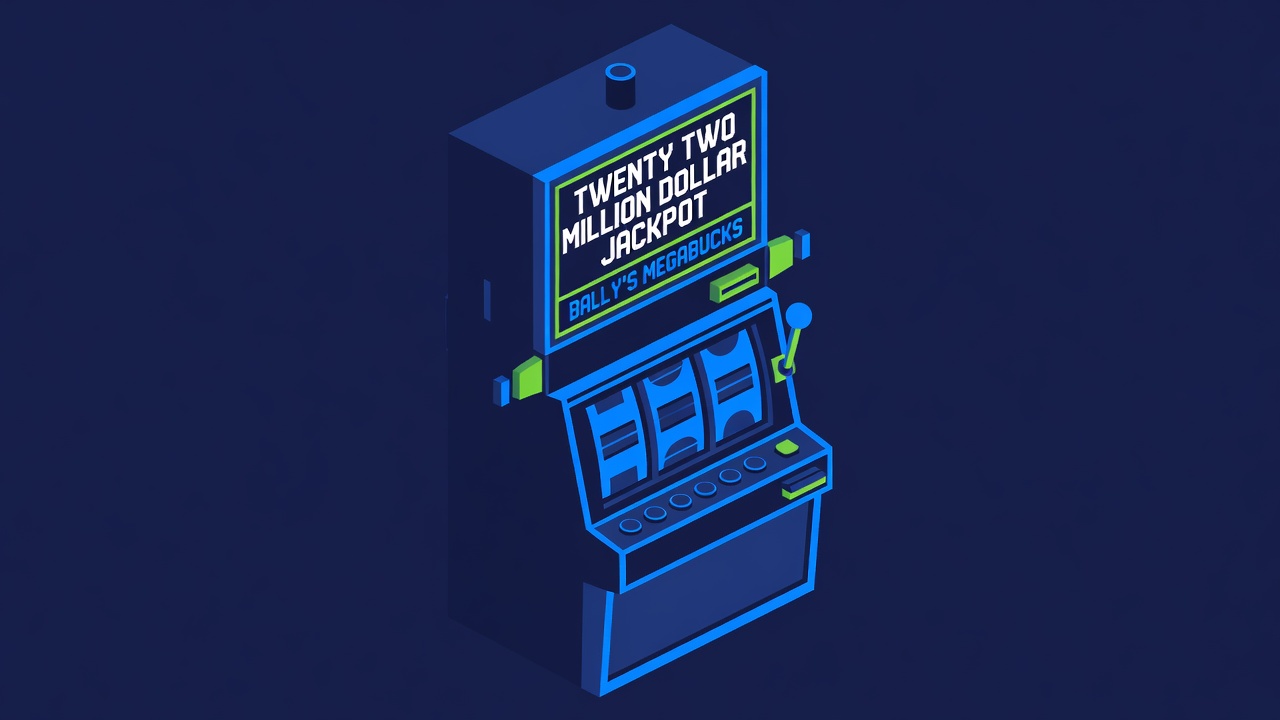
March 1999. Bally's Las Vegas. Johanna Huendl was a real estate agent from Nevada. She came to the casino not planning to play but stopped at a Megabucks machine and decided to feed it a few dollars.
Megabucks is a wide-area progressive. All the Megabucks machines across Nevada are linked. The jackpot builds across every casino. Nobody hits it often. When someone does, the number is usually seven figures minimum. Often way higher.
Johanna hit it. 22.6 million dollars.
I'm going to talk about this differently than the casino would. Because I've been in that seat. Not with that kind of money on the line, but I've felt the moment when randomness gives you more than you expected.
The Mechanics
Megabucks machines take a percentage of every dollar bet across the entire Nevada network and feed it to a jackpot counter. You're not playing the casino. You're playing against the network.
The odds of hitting the Megabucks jackpot are approximately one in 50 million. Let that sit for a second. Fifty million to one. You're more likely to be struck by lightning twice.
But probability is weird. It doesn't care that the odds are bad. One in 50 million means that eventually someone will hit it. When they do, it's usually someone like Johanna. Someone who wasn't even planning to play. Someone who just happened to be at the machine at the moment the RNG cycled to the winning combination.
What Happened After
Johanna's life changed. Not in the way the casino advertising suggests. It changed. But not up.
She took the lump sum: 11 million dollars after taxes. Nevada doesn't have state income tax, but federal taxes took half of the total. She was left with something close to $11 million in actual money.
She bought properties. She tried to start a business with her winnings. She tried to help family members. These are all things people with sudden money try to do. These are all things that usually don't work out the way you'd hope.
The narrative that won the biggest slot jackpot in Nevada history at that time should be a story of a life improved permanently. But it's more complicated than that. Money solves problems you had before the money. It doesn't solve the problems that having money creates.
The Larger Story
Megabucks has been won by hundreds of people since 1986. Most of them spent the money. Some invested. Some lost it all. Some had their relationships destroyed by people who suddenly appeared wanting a share.
Johanna's win was the largest at the time. It's been surpassed since. In 2003, a different player hit $39.7 million on Megabucks.
The thing the casino doesn't tell you when you see these jackpot announcements is that the person who wins is often the person least prepared to have it. They weren't planning to gamble. They weren't professional bettors. They were someone like Johanna who walked in on the day the universe decided to deliver.
How I See It
From a card-counter's perspective, Megabucks is a machine I would never play. The house edge is massive. The odds are so bad that even a shift in volatility doesn't create an opportunity. The only way to beat Megabucks is to not play it.
But I also understand that for someone who isn't a professional, the draw is obvious. The jackpot is huge. The fantasy is real. Feed a machine a hundred dollars and maybe you're Johanna.
The odds don't permit that fantasy to be reality for you, statistically. But odds don't tell the story of the individual case. Johanna beat 50 million to one odds. It happened. It happens. It'll happen again.
She was statistically impossible and then she was real.
What It Means
I think about Johanna sometimes when I think about luck and work. I've spent thousands of hours grinding poker, learning the math, grinding down edges. The house edge in poker comes from my decisions, my skill, my patience.
Megabucks doesn't work that way. Johanna made no decisions. She fed a machine. She won. She did nothing that caused that outcome.
Both of us ended up with money. But only one of us earned it through repetition and skill. The other was randomly selected from the universe.
In the long run, grinding is more reliable. In the short term, randomness is stronger. Johanna experienced the short term that happened to last forever.
That's the story. Not that she was lucky. That she was impossible and then she wasn't.