
Desk story / Live Casino
Live Dealer Chat: Unwritten Rules for Players
The chat feature in live casino games is not social. It is conditional. Understanding the invisible boundaries separates you from other players.
- Filed
- Byline
- Bri Sutton
- Length
- 842 words, about 4 minutes
- Copy ID
- SM365-6937617E
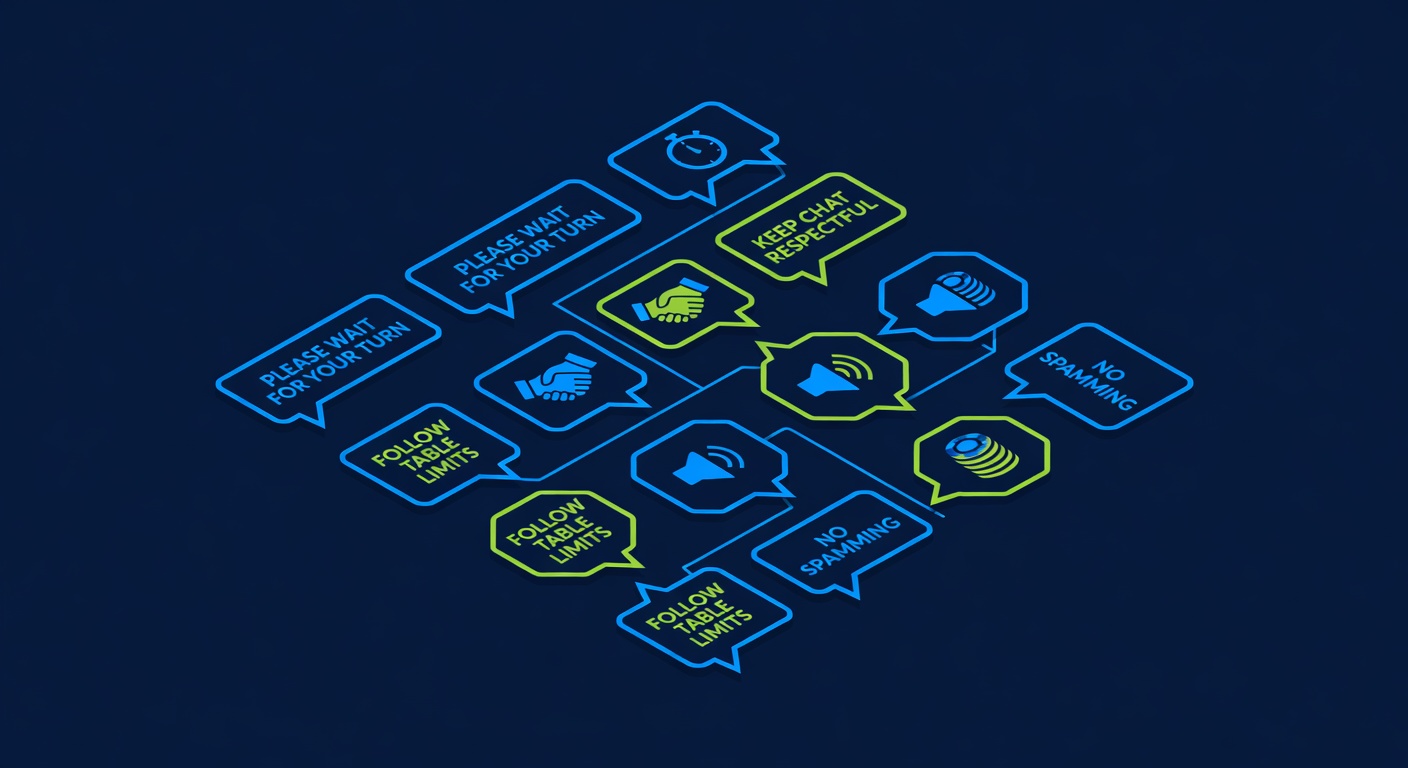
Live dealer games present a unique phenomenon: a player sits alone at their computer but plays against a real dealer. The dealer is usually in Eastern Europe or Southeast Asia, visible via video feed. A chat feature allows communication with the dealer, and sometimes with other players.
These chat interactions operate under implicit rules. These rules are never written. They are enforced through dealer muting, player banning, and eventually IP blocking.
The Basic Boundaries
First: you may compliment the dealer. You may say "good luck on your next hand." You may say "nice shuffle." Dealers appreciate this. They work difficult hours for modest pay. A kind word registers.
Second: you may not accuse the dealer of cheating. If you suspect unfairness, you exit the game and contact support. Saying "this game is rigged" in the chat will result in immediate muting.
Third: you may not discuss your gambling problems in the chat. If you are chasing losses, do not announce it. Some operators will actually close your account on this grounds alone, not out of concern but out of liability exposure.
Fourth: you may discuss strategy with other players. "Should I split eights against a six?" is acceptable. What is not acceptable is discussing individual hands currently in progress. Once a hand is resolved, you may discuss it. During a hand, speculation about dealer upcard or other live information is considered collusion.
The chat is monitored by both the operator and the dealer. Assume everything is recorded.
The Unspoken Hierarchy
High-limit players receive different treatment. A player betting 500 dollars per hand can say things that a 5-dollar player cannot. This is not written policy. This is practice. A dealer will tolerate "come on, a seven" from a whale. They will mute the same phrase from a regular player.
The reason is economic. A five-hundred-dollar-per-hand player might be irritated by muting. They have power. A five-dollar player is replaceable.
This creates a second set of unwritten rules: if you are low-limit, be quiet. If you are high-limit, be charming. If you are medium-limit, match the tone of other players at your table.
What Gets You Banned
Sexual content results in immediate banning. A pass at a dealer results in permanent account closure. This is industry-standard across all operators. I know this not from written policy but from player behavior I have observed over thousands of hours of play.
Abuse of support staff results in banning. A player arguing with a dealer about a rule, then insulting the dealer personally, will be removed from the table and often from the site.
Boasting about large wins is tolerated. Boasting about defrauding other sites is not. I watched a player mention they had been banned from another casino for fraud and were trying to build a bankroll here. That account was closed within one hour.
The Dealer's Position
A dealer in a live casino is an employee of the casino, not an independent contractor. They are instructed to be friendly but professional. They are instructed not to discuss their lives, their pay, or the casino's operations. They are instructed to flag any player behavior that seems unusual.
Behaving normally means: play your hands, make your decisions, accept the outcomes. Chat with restraint. Do not try to befriend the dealer. Do not ask them personal questions. A dealer will answer a question about the game rules. They will not answer a question about whether they like their job.
If a player becomes aggressive in chat, the dealer has been trained to: first, warn the player ("Please keep chat family-friendly"). Second, mute the player. Third, inform a supervisor. By the time the supervisor is involved, the player's account is flagged for potential closure.
Why These Rules Exist
The operator must protect the dealer from harassment. The operator must protect the game from collusion. The operator must protect their reputation from players announcing they are chasing losses or discussing fraud.
These rules also serve a secondary purpose: they create an environment where play is fast and decisions are clear. A social chat room would slow the game. It would encourage banter. It would create relationships. Relationships create expectations. Expectations create disputes.
By establishing clear boundaries around chat, the operator ensures the game moves at maximum speed with maximum clarity. The chat is incidental. The game is primary.
Practical Guidance
If you play live dealer games, assume that every word you type is recorded and reviewed. Assume that any behavior outside of normal play ranges will be flagged. Assume that high-volume players receive more latitude than low-volume players.
Keep your chat to brief, positive interactions. Compliment the dealer. Congratulate other players on wins. Do not discuss your own losing streaks. Do not accuse anyone of anything. Do not attempt to establish a personal relationship with the dealer.
Play your game. Accept the outcomes. If something feels wrong, contact support through proper channels. The chat is not a tool for resolving disputes. It is a secondary feature that exists because the technology allows it, not because the game requires it.