
Desk story / Poker
Online Poker Regulation Around the World: A Regional Overview
Some countries banned poker. Some licensed it. Some ignore it. The regulatory landscape is fractured and the rules make no sense from a game-theory perspective.
- Filed
- Byline
- Nina Frost
- Beat
- PokerRegulation
- Length
- 863 words, about 4 minutes
- Copy ID
- SM365-C7C45101
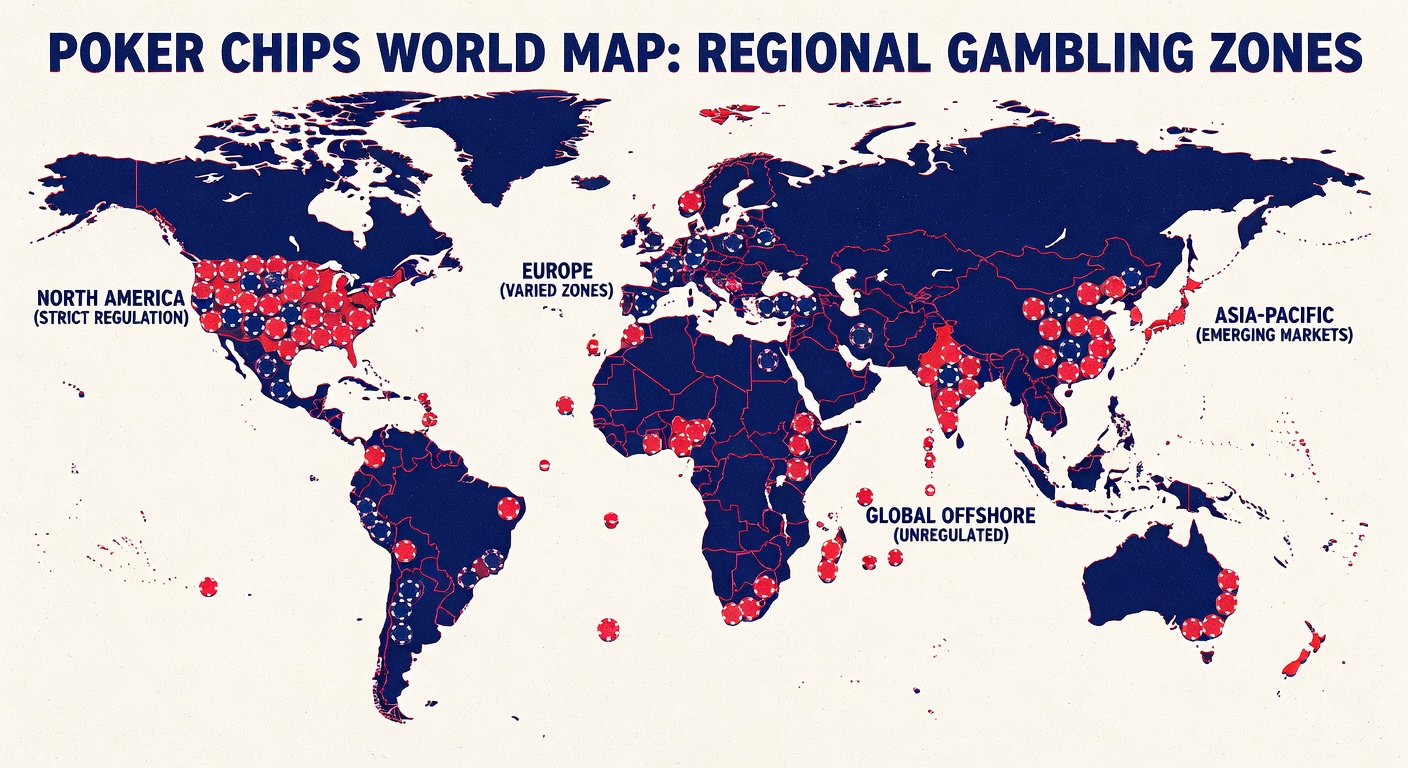
The Regulatory Fracture
Online poker exists in a legal gray zone in most jurisdictions. In 2006, the United States passed the Unlawful Internet Gambling Enforcement Act, which prohibited online gambling generally but left poker's legal status ambiguous. In 2011, the Department of Justice issued a memo stating that the prohibition did not apply to poker, only to games of chance.
This ambiguity created a situation where poker operators could theoretically operate in the US market, but the practical obstacles (banking, payment processing, fear of prosecution) made it impractical for most.
Europe fragmented the opposite direction: most European nations explicitly licensed poker, either through dedicated gambling commissions or through existing regulatory bodies. The United Kingdom, Malta, Gibraltar, and France all maintain active poker licensing frameworks.
The European Licensing Model
Countries that licensed poker created regulatory structures:
- UK Gambling Commission: issues licenses for poker operators, sets standards, collects data
- Malta Gaming Authority: a smaller jurisdiction that became a de facto regulatory home for European operators
- France's ARJEL: an interesting case where France licensed poker on a limited basis while restricting other forms of online gambling
Each jurisdiction set different rules: player protection standards, segregated account requirements, tax rates, dispute resolution procedures.
An operator wishing to serve European players typically obtained licenses in multiple jurisdictions, each requiring separate compliance investment.
The Asian Model
Asian jurisdictions varied wildly:
- China banned gambling entirely, creating massive enforcement costs for operators while driving the market offshore
- Philippines licensed poker through its PAGCOR (Philippine Amusement and Gaming Corporation) authority, becoming a regulatory safe harbor for Asian operators
- Japan maintained prohibition but loosened restrictions in 2018, creating uncertainty about whether poker would be legalized
- South Korea explicitly prohibited poker, creating an illegal but active underground market
The absence of regulation did not stop gambling. It drove it to unregulated operators with lower player protections and higher fraud risk.
The Americas Patchwork
Latin America and the Caribbean became home to poker operators avoiding US regulation. Curaao issued licenses to poker operators. So did several other small jurisdictions. The licenses were often not well-regulated, and fraud was common.
Canada maintained a strange middle position: individual provinces could license poker operators, and many did. This created a legal market in Ontario and British Columbia while maintaining prohibition elsewhere.
The United States slowly moved toward regulation, state by state. New Jersey licensed poker in 2013. Nevada, Delaware, and other states followed. But the fragmented state-level approach meant that a player in New York could not play on New Jersey's regulated sites, even though both were US jurisdictions.
Why The Fragmentation Makes No Sense
Poker is fundamentally a peer-to-peer game. Players compete against each other, not against the house (the operator takes a rake, but does not have a financial stake in outcomes). This means the incentives that govern casino games do not apply. A poker operator benefits from player liquidity, not from house edge. The operator needs more players, not for players to lose money.
The regulatory frameworks that make sense for blackjack (where the house has an edge and player protection is complex) do not apply to poker. You could reasonably argue that poker should be lightly regulated or unregulated, because the financial incentive to exploit players is lower.
Yet the regulatory landscape treats poker the same as slots: heavily licensed, restricted to certain jurisdictions, prohibited in others.
This is politically driven, not rationally driven. Poker became symbolic of gambling's vice. Regulators restricted it not because the mechanics require restriction but because of cultural perception.
The Practical Consequences
The fragmented regulation created:
- Expensive licensing: operators must maintain separate entities and compliance teams for each jurisdiction
- Player liquidity fragmentation: poker games in regulated markets are smaller because they cannot pool with unregulated markets
- Lower operator profitability: the cost of compliance plus the reduced liquidity makes the regulated market less profitable than an unregulated market
- Underground markets: jurisdictions that prohibited poker saw strong underground play, where no player protections existed
From a game-theory perspective, this is inefficient. A single global regulatory framework would create more liquidity, lower costs for operators, and better player protections.
Why Global Regulation Has Not Arrived
A global regulation would require international coordination that has not materialized. The US does not regulate like Malta. China does not regulate like the UK. There is no international body with enforcement power.
Each jurisdiction guards its authority jealously. A state or nation that licenses poker can extract tax revenue and regulatory fees. Giving up that authority to a global body means losing that revenue.
The Trend
Slowly, the US is trending toward state-level licensing. Europe has consolidated somewhat around the Malta model. Asia remains fragmented.
The long-term trend is likely toward more licensing, not less. Prohibition proved impossible to enforce and eliminated the ability to collect tax revenue. Licensing creates revenue and some player protection.
But we are thirty years away from a coherent global poker regulatory framework, if it ever arrives.
The current poker regulatory landscape exists because of politics, not because of the mathematics of the game. A game that could be lightly regulated is heavily restricted, while an unregulated market thrives underneath.