
Desk story / Baccarat
Phil Ivey vs Crockfords: The 7.7M Pound Baccarat Case
A professional gambler won seven million pounds. The casino refused to pay. The case went to court. Behavioral economics explains why.
- Filed
- Byline
- Wes Callahan
- Length
- 639 words, about 3 minutes
- Copy ID
- SM365-D2EBEC02
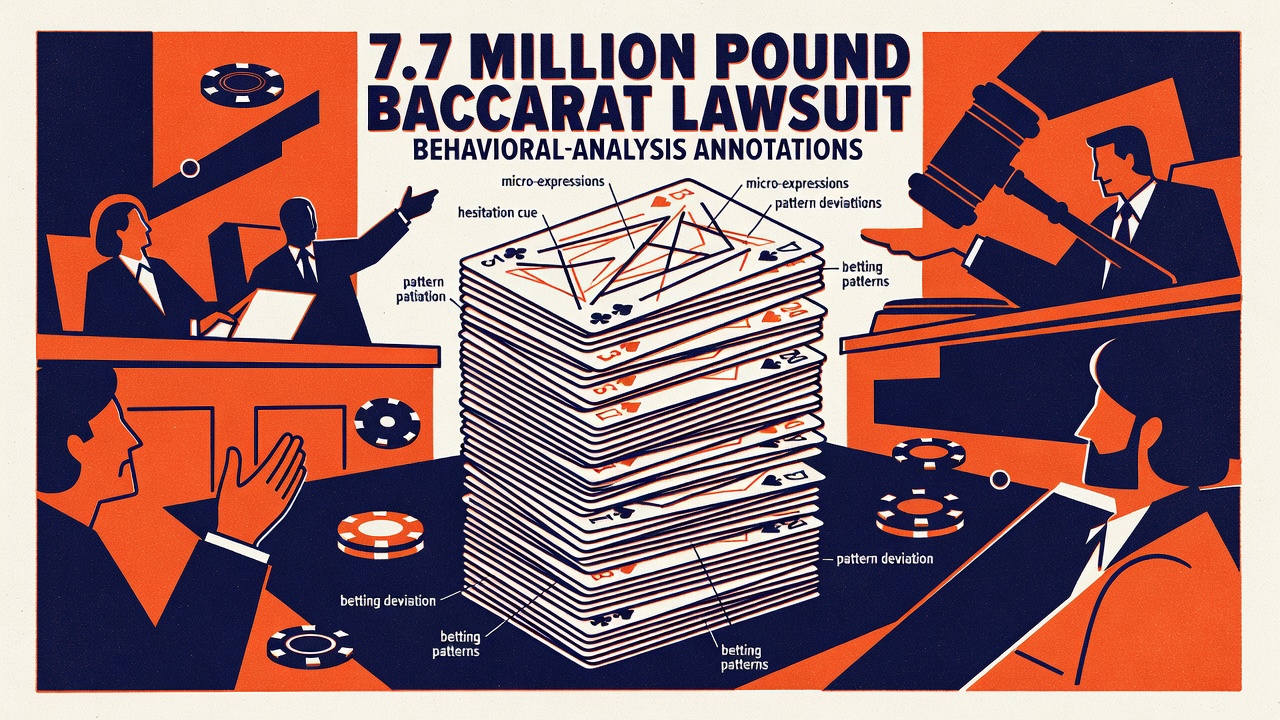
Phil Ivey is a world-class poker player. In 2012, he played baccarat at Crockfords Casino in London using a technique called "edge sorting."
Baccarat is a simple game: the player either wins or loses based on which hand gets closer to 9. The outcome is determined before cards are dealt. The player has no decisions to make. They just predict which side will win.
Edge sorting works like this: baccarat cards have slightly imperfect cuts along their edges. Cards that have been cut differently (shaved) have slightly different dimensions. An attentive observer can use this asymmetry to identify cards by looking at the back.
Ivey requested that the deck be handled in a particular way (rotated) that would orient favorable cards in a predictable direction. He then used the edge differences to identify high-value cards and predict the outcome of hands.
Over multiple sessions, Ivey won £7.7 million.
The Dispute
Crockfords refused to pay. They claimed Ivey had cheated. Ivey claimed he'd done nothing illegal. He'd simply used information available to anyone observant enough to notice.
The case went to court.
The Behavioral Angle
From a behavioral economics perspective, what's interesting is not whether Ivey cheated. It's why Crockfords believed he cheated when his technique was entirely legal.
Casinos are loss-averse. A £7.7 million loss violates their expectation of how much they should win. Behavioral economists call this "reference dependence": people evaluate outcomes relative to a reference point (usually the status quo), not in absolute terms.
Creokfords' reference point was "we should win this game." Ivey won instead. This was experienced as a loss, not just a gain for the opponent.
The behavioral response was to deny the loss. To reframe it as cheating. To make it someone else's fault rather than accept the outcome.
The Court Decision
The UK courts sided with Crockfords. The judges ruled that Ivey had "cheated" because he'd manipulated the game beyond what the casino considered fair play.
The legal argument was subtle: Ivey had used information about the physical deck to gain an advantage. The casino had not disclosed this vulnerability. Therefore, Ivey bore some responsibility for the outcome by exploiting it.
This is a behavioral economics argument wrapped in legal language. The court said "you can't win by finding exploits in the game." This is reasonable from a casino perspective (we need to protect our business) but odd from a fairness perspective (the rules didn't prohibit what you did).
What This Reveals
Casinos operate on an asymmetry. The house designs the game. The house sets the rules. The house interprets the rules.
When a player outsmarts the system, the casino's loss-aversion kicks in. Rather than accept the outcome, the casino redefines the game retroactively.
This is a standard behavioral response. When you lose at your own game, you tend to change the rules. Crockfords did exactly this. They lost £7.7 million, so they changed the rules to make Ivey's win invalid.
The Principles
From a behavioral economics standpoint, casinos are more loss-averse than profit-motivated. A casino that wins £100 million every year can absorb a £7.7 million loss. But loss-aversion means that £7.7 million loss feels worse than a £7.7 million gain would feel good.
This creates a situation where casinos will spend millions in legal fees to recover millions in disputed wins. The action is irrational from a pure profit perspective. It makes sense from a loss-aversion perspective.
The Takeaway
If you beat a casino through skill or observation, the casino might not honor the win. The legal recourse is expensive. The casino will fight.
Phil Ivey ultimately lost the case. He did not recover the £7.7 million. The casino successfully reframed his win as cheating, even though his technique was technically legal.
This is what loss-aversion in action looks like. The casino preferred a legal battle to accepting a loss.