
Desk story / Security
Recognizing Phishing Emails That Impersonate Online Casinos
Your account has been compromised. Verify your details immediately. The email looks official. The sender address looks right. It's all wrong.
- Filed
- Byline
- Bri Sutton
- Beat
- Security
- Length
- 622 words, about 3 minutes
- Copy ID
- SM365-0CF0E1C1
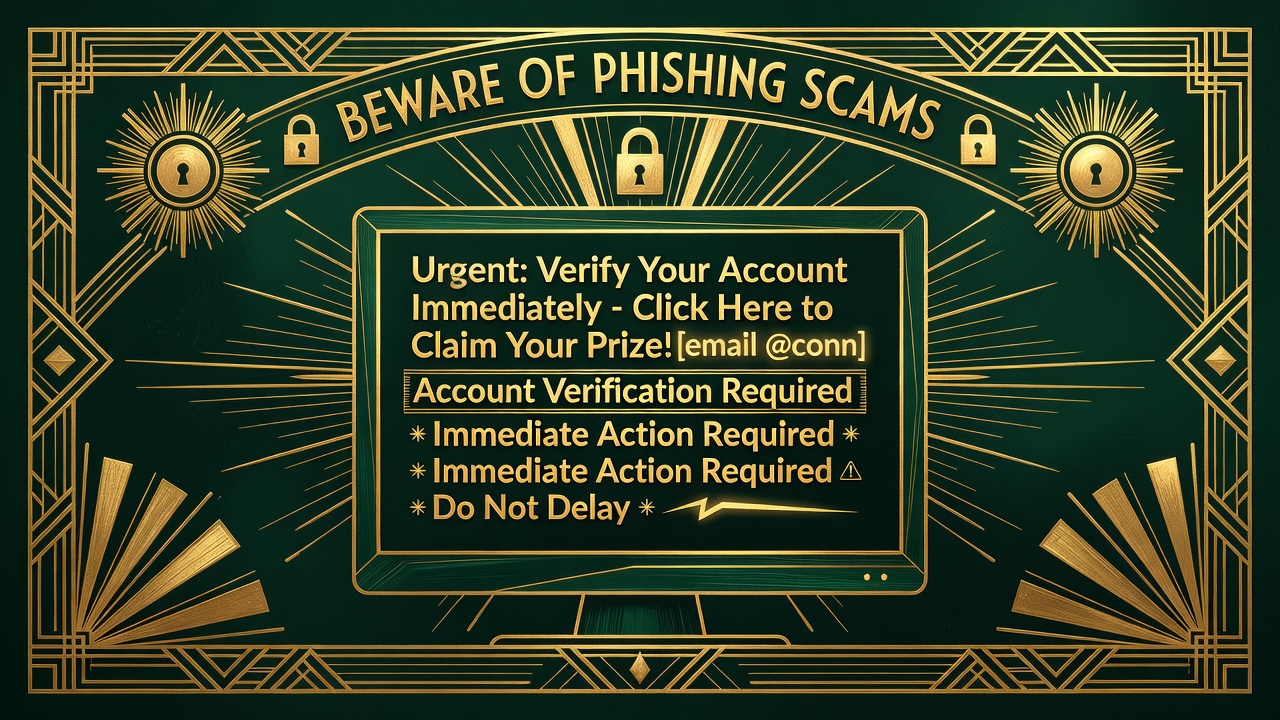
Phishing emails that impersonate casinos follow a predictable pattern. Understanding the pattern helps you recognize them.
The Setup
You receive an email claiming to be from your casino. The subject line creates urgency: "Immediate action required," or "Your account has been compromised," or "Verify your identity now."
The sender address looks plausible. It might say support@yourscasino.com (opens in a new tab) or security@yourscasino.com (opens in a new tab). But it's not actually from the casino. It's from phisher@dodgydomain.com (opens in a new tab) with the display name spoofed to look official.
The email body has branding stolen from the casino's official emails. Logos, colors, formatting. It looks professionally done.
The Ask
The email asks you to click a link and verify your details. Username, password, or payment information. The link looks like it goes to the casino website. But it doesn't. It goes to a spoofed website that looks identical to the real casino site.
You enter your details. The attacker now has them.
The Tells
Generic greeting: "Dear User" or "Dear Customer" instead of your actual name. The casino knows your name and uses it.
Grammatical errors: Phishing emails often have awkward phrasing. "Your account has been compromised and must you verify immediately." Professional casinos hire people who can write English.
Urgency language: Threats of account closure, security warnings, "act now" messaging. Real casinos don't pressure you this way. They give you time to respond.
Suspicious links: Hover over the link (don't click). The URL should match the casino's actual domain. If it says yourscasino.com in the text but the actual link goes to yourscasinoo.com or yourscasin0.com (with a zero instead of O), it's phishing.
Poor formatting: Real casino emails are professionally formatted. Phishing emails often have broken layouts, misaligned images, or inconsistent fonts.
The Real Casino Behavior
Legitimate casinos never ask for passwords in emails. Never. If your password needs to be changed, they direct you to log in normally and change it from your account settings.
Legitimate casinos never ask for payment information in emails. Ever. They have secure systems within their website for managing payment methods.
Legitimate casinos use consistent branding and professional communication. They don't create artificial urgency.
What to Do
If you receive a suspicious email claiming to be from your casino: Don't click any links. Don't download attachments. Delete the email.
If you think there's a genuine account security issue, log in directly to the casino website using your normal login method. Don't use any links from the email. Go straight to the casino's URL in your browser.
Check your account. If something is wrong, report it to the casino's customer support through the website.
The Larger Context
Phishing emails targeting casino players are common because casino players are known to have active payment methods and cash accounts. The attacker's goal is credential theft.
Once they have your username and password, they can access your account, change the password, and attempt to withdraw funds. Some casinos process withdrawals slowly, giving the attacker hours to move your money before you realise.
Prevention
Use a unique password for your casino account. Not the same password you use for email or other sites.
Enable two-factor authentication if the casino offers it. This prevents account takeover even if your password is compromised.
Check your email security settings. Some email providers flag phishing emails automatically. Ensure you're using a service that does this.
Don't open suspicious emails on work computers where your casino account is also accessible. The phishing email might contain malware that steals credentials.
Be paranoid. If an email feels off, it probably is. The worst that happens is you delete a legitimate email and log in manually to check your account. The worst that happens if you trust a phishing email is you lose your casino account and any funds in it.