
Desk story / Guides
How to Recognize a Gambling Problem Before It Escalates
Gambling problems develop gradually. The early signs are obvious if you know what to look for. Most people miss them.
- Filed
- Byline
- Bri Sutton
- Length
- 734 words, about 4 minutes
- Copy ID
- SM365-5A959AA4
The Early Indicators
A gambling problem usually begins with a specific trigger: a big win that feels like skill, a stressful period that requires distraction, a boring season that needs excitement. Something shifts the frequency or the stakes of your gambling.
The early warning signs:
- You are gambling more frequently than you intended
- You are wagering more money than you originally planned
- You think about gambling when you are not doing it
- You have had to lie to someone about your gambling
- You have made an excuse to avoid social plans in order to gamble
- You have felt anxiety or regret after a gambling session
- You have had to increase the stakes to feel the same excitement
If any of these are true, examine them honestly.
The Progressive Pattern
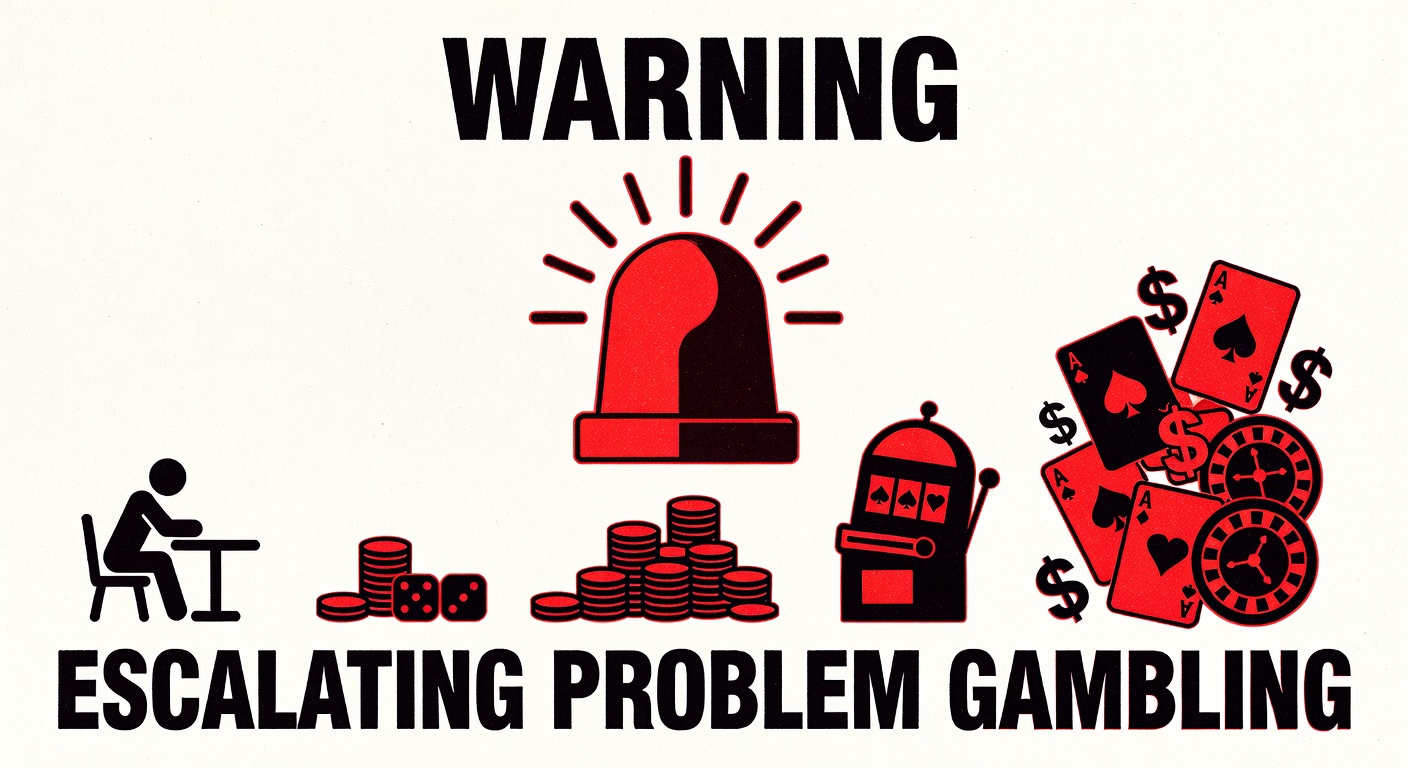
Gambling problems escalate in recognizable stages:
Stage One: Occasional gambling that you enjoy. You lose money sometimes and win sometimes. The losses are acceptable.
Stage Two: More frequent gambling. You start to plan your week around gambling. You begin to think of gambling as entertainment that has expected value.
Stage Three: Gambling becomes a response to stress. When something goes wrong, you gamble. You win occasionally and this reinforces the belief that gambling can solve money problems.
Stage Four: You have lost money you cannot afford to lose. You do not stop. You increase stakes in hopes of recovering the losses.
Stage Five: Chasing losses becomes the primary driver. You are not gambling for entertainment. You are gambling to fix what gambling broke.
Stage Six: Catastrophic loss or external intervention (legal problems, relationship collapse, job loss).
If you are in Stage Two or Three, you can still stop relatively easily. The longer you wait, the harder it becomes.
The Self-Assessment
Ask yourself these questions:
- If I could not gamble, would I feel anxious or distressed?
- Do I spend time thinking about past wins or planning future gambling?
- Have I lost money that was supposed to be for bills or savings?
- Have I borrowed money specifically to gamble or to cover gambling losses?
- Have I lied about how much time or money I spend gambling?
- Do I feel like I need to gamble more to get the same effect?
- Have I had periods of trying to stop or cut back, only to resume?
If you answered yes to more than two of these, you likely have a gambling problem or are approaching one.
The Behavioral Patterns
Beyond the questions, look for patterns:
- You consistently gamble on specific days or times (weekends, after work)
- Your gambling sessions are getting longer
- Your bets are increasing in size
- You are gambling with money that has other purposes
- You are hiding gambling activity from family or friends
- You feel mood swings based on gambling outcomes
Each of these is a signal. Multiple signals indicate a problem.
The Financial Red Flags
- Your credit card statements show frequent casino charges
- You are carrying balances you previously paid off
- You are using cash more frequently (harder to track)
- You have taken loans or asked for money without explaining why
- Your savings are depleting faster than your income would suggest
The Relationship Signals
People close to you will notice before you do. They will comment on:
- How much time you spend gambling
- The money you are losing
- Your mood changes
- Your unavailability
- Your defensiveness about your gambling
If someone you trust is expressing concern, listen.
The Action Steps
If you recognize any of these signs, take action now:
- Set a firm gambling budget and stick to it
- Use the casino's deposit limit tools
- Tell someone you trust about your gambling
- Consider talking to a therapist or counselor
- Look into organizations like GamCare or Gambling Therapy
- Consider self-exclusion if you cannot control it
The earlier you act, the easier it is to regain control.
The Hard Truth
Gambling problems do not resolve themselves. You cannot "get lucky and win the money back." You cannot improve your strategy and beat the odds. The only solution is to stop gambling or to strictly limit it within a realistic budget.
Everything else is denial.
The best time to recognize a gambling problem is in Stage Two. The second best time is now.