
Desk story / Payments
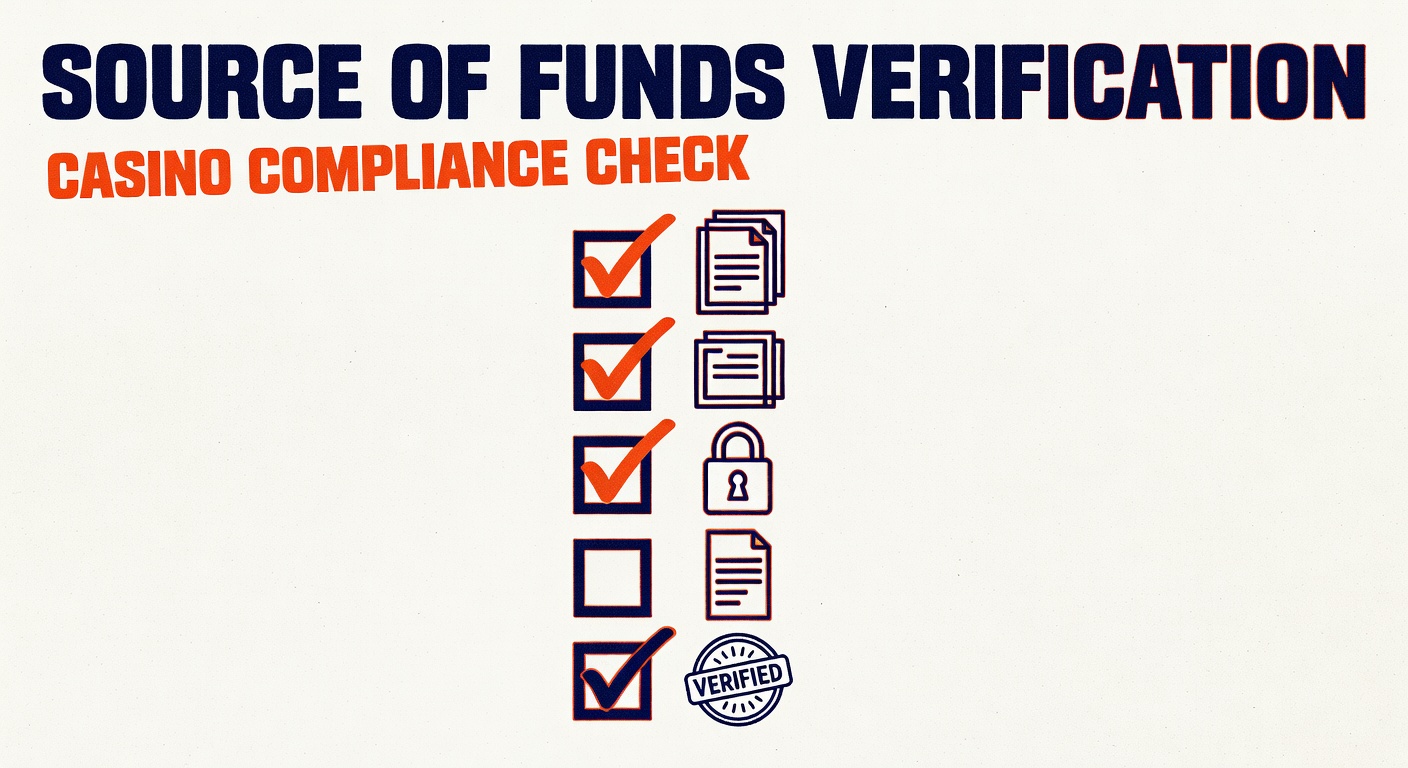
Why Some Casinos Ask for a Source of Funds Document
Source of funds requests stop money launderers. They also inconvenience regular players. I know both sides because I've run the surveillance operations.
- Filed
- Byline
- Cole Hastings
- Length
- 750 words, about 4 minutes
- Copy ID
- SM365-FAF0F447
The Legal Requirement Nobody Wants to Discuss
It is not discretionary. Federal law requires it. The Bank Secrecy Act, passed in 1970 and strengthened in 2001 with the USA PATRIOT Act, mandates that casinos maintain records of significant financial transactions and document their sources.
When a player buys in for fifty thousand dollars in chips or more, the casino must file a Currency Transaction Report (CTR) with FinCEN, the Financial Crimes Enforcement Network. The CTR includes the source of the funds. If the source cannot be documented, the casino must file a Suspicious Activity Report (SAR) instead, which flags the transaction for federal investigation.
Sound like paperwork? It is. It is also how the government tracks money laundering, terrorist financing, and proceeds of crime flowing through the casino system.
How Cheats Exploit This
Money laundering through casinos works like this. You have illegally obtained money: drug proceeds, stolen goods, fraud payoffs, corruption. You cannot spend it openly without drawing attention. You need to make it appear as though you earned it legally.
The casino offers a path. You walk in with one hundred thousand dollars in cash. You buy chips. You play for thirty minutes. You cash out ninety thousand dollars in casino checks, which you can deposit into a bank account. The casino now holds your fifty thousand in cash revenue, and you have successfully converted some of your dirty money into what appears to be gambling winnings.
The cheats get caught when they repeat this too frequently, when the amounts are too large, or when they cannot produce documentation of the source when asked. A good AML compliance officer will ask:
- What is your occupation?
- How long have you held this job?
- What bank do you use?
- Did you withdraw this money from that bank?
- Can you provide bank statements showing the source of these funds?
A man who says he is a plumber making seventy thousand dollars per year but wants to buy in for two hundred thousand dollars raises immediate questions. Questions lead to Suspicious Activity Reports. Suspicious Activity Reports lead to federal agencies asking harder questions.
Why Regular Players Resent It
A businessman who withdrew fifty thousand dollars from his personal savings account to play a weekend in Vegas should be able to play without submitting a document. He is not a criminal. He is a customer.
Yet he must produce a bank statement showing the withdrawal, or he cannot complete the transaction. The system treats him as if he is guilty until he produces evidence of innocence. Many players find this demeaning. Some refuse to provide the documentation and walk to another casino.
This is the tension that casino AML teams navigate. The law requires documentation. The customer resents it. The casino wants the business. No one is happy.
But casinos that fail to implement proper AML procedures face devastating penalties. In 2013, UNLV Casino received a two hundred forty million dollar fine for AML failures. MGM Resorts paid a hundred million in 2020. These are not inconveniences. These are company-threatening fines.
How Sophisticated Players Respond
The smart ones prepare.
Before arriving at the casino, they contact the casino directly and provide documentation. They provide bank statements. They provide letters from their employers. They explain their financial profile in advance. They walk in with their paperwork ready.
The casino AML department reviews it in advance. By the time the player arrives at the cage, the questions have been answered. The player buys chips without delay. Everyone moves forward smoothly.
The players who create problems are the ones who show up unprepared, withdraw large amounts in cash (which generates its own federal report), and then expect the casino to process them without questions. That is not how compliance works.
The Real Cost
- Time wasted on paperwork instead of play
- Privacy concerns: your financial information is now part of a federal filing
- The psychological cost of being treated as a suspect in your own transaction
Yet the alternative is worse: a financial system that can be infiltrated by criminals, where proceeds of crime are laundered into legitimate businesses, where terrorist networks can move money without detection.
I have worked both sides. The compliance officer sees a net that catches criminals. The frustrated player sees a net that catches them. Both are correct.
The question is not whether source of funds documentation should exist. The question is whether you have the documentation ready when you arrive at the cage.