
Desk story / Bonuses
Stablecoins Like USDT and USDC for Casino Deposits
At a high-limit room in Malta, a gentleman whose wealth was carefully distributed across blockchains moved USDC without a banker, without a receipt, without witnesses. This is not new money doing new things. This is old money learning new corridors.
- Filed
- Byline
- Bri Sutton
- Length
- 709 words, about 4 minutes
- Copy ID
- SM365-99BB0BCA
The private salon at Pragmatic Play's headquarters (or any live dealer studio in Costa Rica or Malta) has seen money move in every way imaginable. Cash in a briefcase. Traveler's checks. Wire transfers from the Caymans. Cryptocurrency.
But stablecoins like USDC and USDT are different. They are cryptocurrencies that promise to hold a fixed value in US dollars. The promise matters to a particular kind of player.
I knew a woman who ran a hedge fund from a small office in Zug, Switzerland. She had capital that had been earned in ways that benefited from a lack of documentation. She could not move that capital through traditional banking. But she could move it through Ethereum, from her wallet to a casino operator's wallet, and neither her bank nor any regulator would know the transaction had occurred.
She moved in USDC. The operator took it. She played. She lost. Or she won. Either way, the money had traveled without passing through any institution.
The Mechanism
A stablecoin is a token on a blockchain that is backed by reserves held by the issuer. USDC is issued by Circle and is backed by dollar reserves and short-term US government securities. USDT is issued by Tether and claims to be backed by dollar reserves (the actual backing has been questioned).
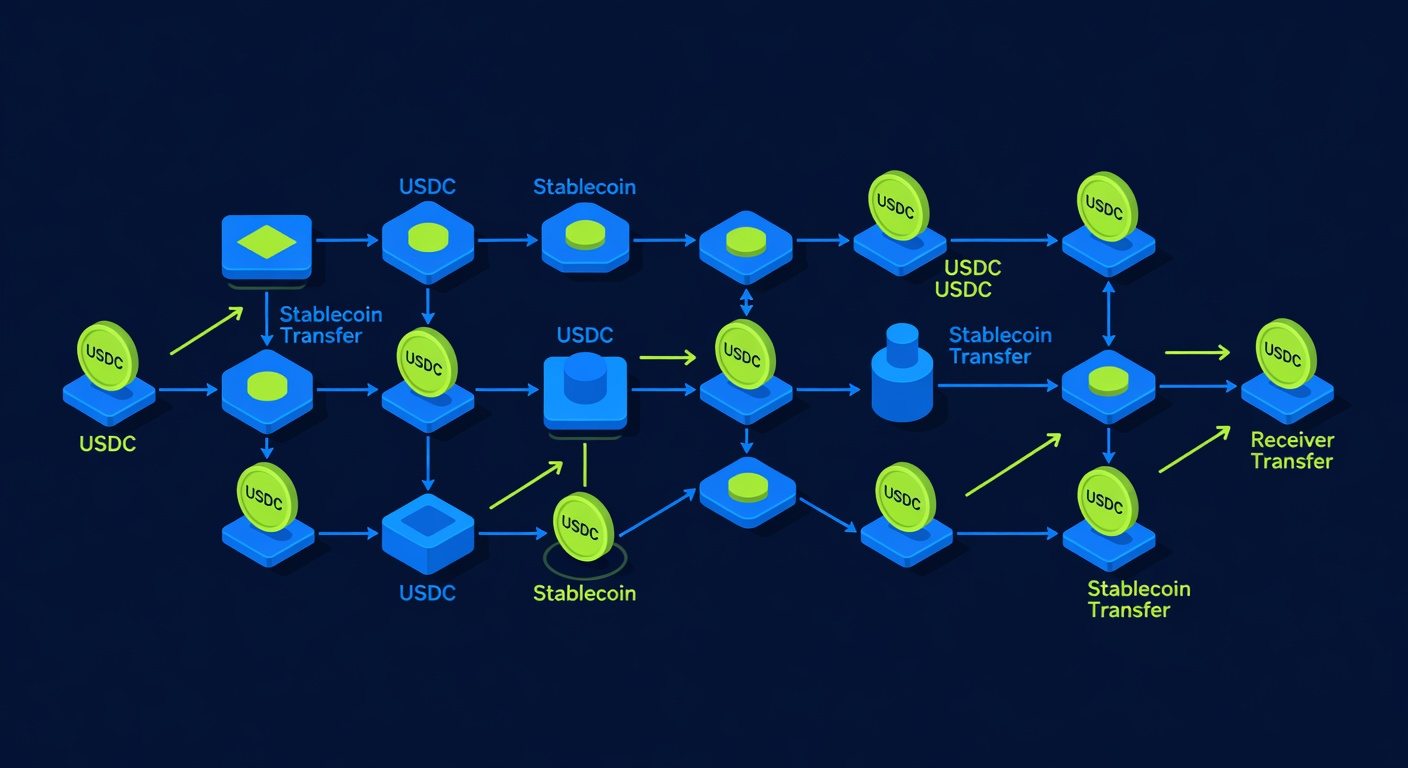
A casino operator can accept USDC in their smart contract. The player sends USDC to the operator's wallet address. The operator's backend system notes the deposit. The player plays. The player then requests a withdrawal, and the operator sends USDC back to the player's wallet.
From the operator's perspective, this is simpler than accepting credit cards. There is no payment processor. No merchant account. No disputes. The blockchain is immutable. The money is transferred and the transaction cannot be reversed.
Why the High-Net-Worth Player Prefers It
There are several reasons this matters to a particular type of player.
First, privacy. A bank transaction leaves a record. A cryptocurrency transaction leaves only the public address. If you move USDC from Wallet A to Wallet B, the only record is that these addresses exchanged USDC. Nobody knows who controls either address unless the address has been publicly registered (which it often has not).
Second, speed. A bank wire takes days. USDC transfers settle in minutes. For a player who wants to move money quickly, this matters.
Third, no intermediary. A traditional casino must hold your money in a bank account. That bank account is subject to bank regulations, banking compliance, regulatory freezes. The operator's reserves could be seized by a government. Your funds in that account are potentially at risk in ways they are not in a USDC transaction, where you hold the private key to your wallet.
Fourth, currency preservation. A player who earned money in a jurisdiction with currency controls can move it to USDC and hold USDC indefinitely without converting to fiat and passing through banking systems.
The Operators' Interest
From the operator's perspective, accepting USDC means they can operate without a banking relationship. They do not need a merchant processor. They do not need to file KYC documentation with a bank. They do not need to navigate sanctions screening with a traditional financial institution.
This is why unlicensed operators love stablecoins. A operator in Belarus who cannot get a banking relationship can accept USDC and convert it to fiat on a crypto exchange with minimal friction.
For licensed operators, stablecoins are an alternative payment method, like credit cards. But they come with regulatory complications. In the EU, stablecoins are regulated under MiCA (Markets in Crypto Assets Regulation), which means operators have to verify where the stablecoins come from.
The Reality
Stablecoins like USDC and USDT have enabled a type of capital movement that was previously impossible without a bank. A player can move money from their wallet to an operator's wallet without any institution knowing the transaction occurred.
For a legitimate player in a legitimate jurisdiction, this is merely convenient. For a player moving money that cannot pass through banking systems, this is essential.
The casinos understand the clientele. They accept the stablecoins. They know that a portion of the money they receive has never touched a bank. They do not care, so long as the money settles on the blockchain.