
Desk story / Slots
Turbo Spin Mode: Does Faster Play Change Your Results?
A woman from Sacramento comes into the casino with two thousand dollars. She sits at a machine. The machine has a turbo button. She presses it. The spins accelerate. Two hours later, the two thousand is gone.
- Filed
- Byline
- Nina Frost
- Length
- 754 words, about 4 minutes
- Copy ID
- SM365-3DE5DE96
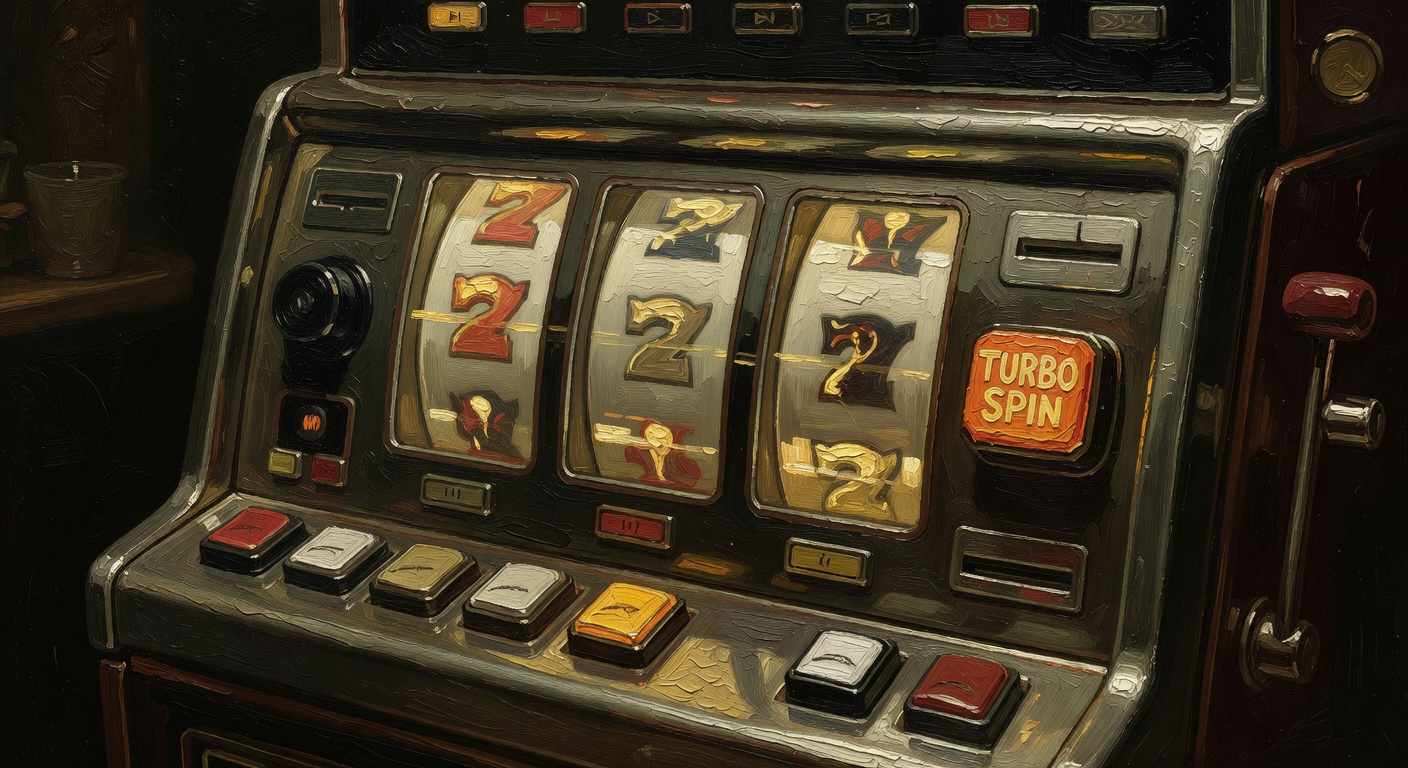
The machine in the corner near the restrooms has been running turbo mode since dawn. A player sits there, the same player who has been there since the shift change. She looks up at the clock, as if surprised, then returns to the spinning reels.
Turbo mode accelerates the spin animation. The reels blur faster. The result is determined the same way, but the presentation rushes. It feels like action is escalating.
There is something seductive about the speed. The player places a bet and immediately sees the result. The feedback loop compresses. Two spins per minute becomes four. The player who wanted thirty spins gets sixty. The time passes without marking itself.
I watched her for an hour. She never paused. She never ordered a drink. The machine beeped occasionally when she won small amounts. She fed the winnings back into the machine. The stack of bills beside her diminished steadily.
Turbo mode does not change the mathematics. The RTP (return to player) is identical. The house edge is identical. The spin is determined the same way whether it takes three seconds or thirty.
But the behavior changes. Players in turbo mode place more spins per session. They lose more money per session. The effect is measurable in casino data. Machines with turbo buttons generate higher revenue than identical machines without them.
The Duration Effect
The critical variable is total spins within a fixed time. A player intends to play for thirty minutes. On a normal machine, they get twenty spins. On turbo, they get sixty. The expected loss per spin is fixed. The expected loss per session increases with the number of spins.
Casinos love turbo mode because it changes player behavior without changing the game. The math is identical. The profit is higher. From the casino's perspective, turbo is a gift. It is a feature that extracts more revenue without generating regulatory attention. The game has not changed. The speed has changed.
The illusion is that faster play is more skill-intensive, when actually faster play is less thoughtful play.
A player in normal mode, with three seconds of reel animation per spin, has time to pause. To think about walking away. The pause introduces deliberation. Turbo removes the pause. Sixty spins in thirty minutes means one spin every thirty seconds, including the time to place the bet. No pauses. No deliberation.
Psychologically, acceleration creates the illusion of progress. A player sees the spins moving quickly and believes the game is favoring them, as if speed is a signal of luck. It is not. Speed is a signal of reduced engagement time.
The woman playing turbo mode was using the button to remove thought from the equation. She had two thousand dollars. She wanted to make a decision point: either leave with money or leave with none. Turbo helped her reach the decision point faster.
When she eventually got up and left, her face had the particular flatness of someone who had been playing slots for six straight hours. Not distressed. Not happy. Depleted.
The Design Choice
Turbo mode exists because it benefits the casino. There is no other reason. It does not benefit the player. A player who plays slower makes fewer bets and loses less money. A player who plays faster makes more bets and loses more money.
Turbo is marketed as a convenience, a feature for impatient players. But impatience is exactly the state that turbo mode exploits. A player who is impatient is a player who has stopped thinking about the odds and started thinking only about action.
The casinos know this. They deploy turbo mode on machines positioned in high-traffic areas, near exits, in locations where impulse players pause. A distracted player wants speed. Turbo delivers it. The player's expected loss scales with the time they have available. Turbo compresses the time, increases the density of bets, increases the loss.
Some jurisdictions have restricted turbo mode or required warnings about the effect. The warning is typically: "Turbo mode increases the speed of play and may increase the amount of money wagered." The warning is accurate. The player reads it, nods, and presses turbo anyway because the desire for speed outweighs the warning about consequences.
The woman from Sacramento did not need turbo mode. She could have played normal speed and been in the same place six hours later with the same money lost. But turbo compressed the loss into a concentrated experience. For her, that might have been the point. To get the agony over with quickly.