
Desk story / Crypto Gambling
Bitcoin vs Ethereum for Crypto Gambling: Which Is Faster?
Bitcoin and Ethereum are distinct technologies with different transaction speeds, cost structures, and regulatory treatments. For gambling purposes, the differences matter less than players assume.
- Filed
- Byline
- Wes Callahan
- Length
- 747 words, about 4 minutes
- Copy ID
- SM365-D76EDCA5
The first online casino to accept Bitcoin launched in 2011, two years after Bitcoin itself was created. The casino accepted deposits and payouts in Bitcoin, leveraging the cryptocurrency's pseudonymity to operate in jurisdictions where regulated gambling was not permitted.
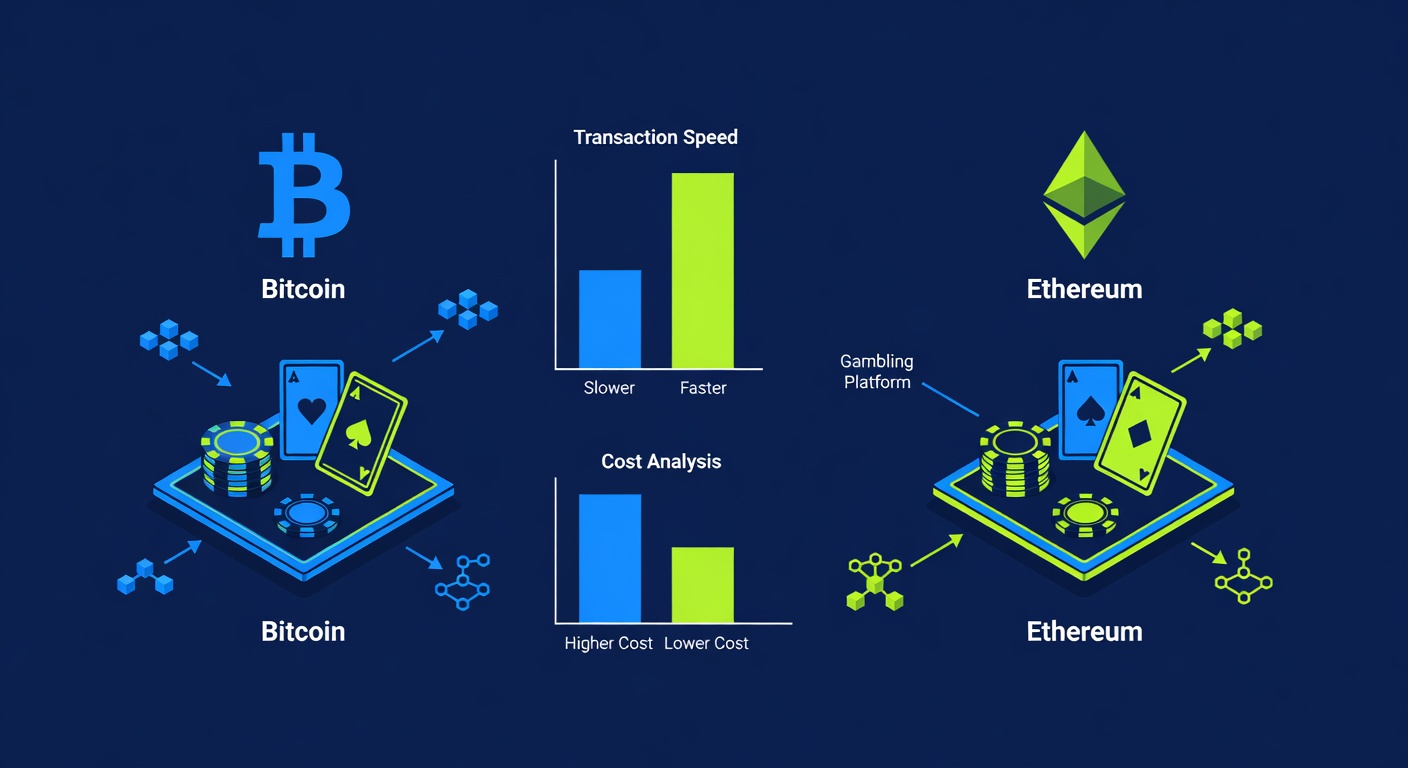
Bitcoin transactions, at that time, took approximately ten minutes. Ethereum did not exist until 2015. When Ethereum launched, its transaction times were significantly faster, approximately twelve to fifteen seconds for a block confirmation, though full settlement took longer.
For a gambling operator, transaction speed determines settlement speed. A player deposits Bitcoin into their account. The money is in the account once the transaction is confirmed by the blockchain. Bitcoin's confirmation time creates a gap: the player must wait ten minutes to deposit, play, and withdraw.
Ethereum's faster transaction speed reduced this gap. A player could deposit Ethereum and see the funds within seconds. This speed advantage made Ethereum attractive for high-frequency gambling operations, where players might make many transactions per session.
But the comparison is more complex than speed alone. Bitcoin's network is larger and more secure. The hashrate (computational power securing the network) is exponentially higher for Bitcoin than Ethereum. A double-spend attack against Bitcoin is effectively impossible. Against Ethereum, it is theoretically possible, though practically difficult.
For a casino operator, this security differential mattered. Bitcoin transactions, being older and more established, were less prone to reversal disputes. Ethereum transactions, being newer, sometimes reversed due to network forks or disputes about transaction validity.
The Current Landscape
In 2024, the landscape has shifted. Bitcoin's average transaction time is still ten minutes, but layer-two solutions like Lightning Network enable near-instant transactions with minimal fees. Ethereum's base-layer transaction time has improved to approximately twelve seconds, but network congestion often drives up transaction costs.
The fee structure is the real differentiator now. Bitcoin on the base layer carries transaction fees measured in dollars. Ethereum's network fees, denominated in gas, can range from a few cents to hundreds of dollars depending on network congestion.
Gambling operators prioritize low fees. A player depositing one hundred dollars should not pay fifteen dollars in transaction fees. This constraint pushes operators toward layer-two solutions (Polygon for Ethereum, Lightning for Bitcoin) where fees are fractions of a cent.
The choice between Bitcoin and Ethereum for gambling is not about which is faster, but which ecosystem has more operational players with better fee structures.
Regulatory treatment differs. Some jurisdictions explicitly permit Bitcoin gambling but restrict Ethereum gambling due to smart-contract complexity. Others treat all cryptocurrencies identically. The regulatory framework, not the technology, often determines which coin is used.
Player preference is another variable. Bitcoin-native players (those who believe Bitcoin is the only legitimate cryptocurrency) will accept longer deposit times if they must use Bitcoin. Ethereum-native players might tolerate higher fees if they prefer Ethereum.
Historically, Bitcoin dominated crypto gambling because it was first. There was no Ethereum alternative. By the time Ethereum launched, Bitcoin had already accumulated the network effects that made it the natural choice. When better alternatives emerged (faster blockchains, lower fees), the gambling ecosystem did not migrate wholesale. Instead, operators began supporting multiple blockchains, letting players choose.
The Technical Details
Bitcoin transactions follow a strict pattern: a transaction is broadcast to the network, miners include it in a block, the block is added to the chain, and after approximately ten minutes (one block), the transaction is considered confirmed. Final settlement requires multiple blocks: six confirmations is the standard, which takes approximately one hour.
For casino deposits, this one-hour waiting period is problematic. A player deposits Bitcoin and cannot gamble for an hour. Some casinos reduced this by accepting unconfirmed transactions, trusting that the transaction would eventually confirm. This introduced risk: if the transaction did not confirm, the casino would refund the player, consuming staff time.
Ethereum transactions, being faster, allowed deposits to be playable within minutes. This speed advantage was significant enough that some casinos integrated Ethereum specifically to improve deposit experience, even if they preferred Bitcoin for other reasons.
Stablecoin alternatives, which exist on both blockchains, have changed the calculation entirely. USDC, USDT, and USDC each settle via blockchain infrastructure. If deployed on a fast, low-cost blockchain like Polygon, they offer the speed and fee advantages of newer networks without the volatility concerns of Bitcoin or Ethereum.
The historical moment where "Bitcoin or Ethereum" was the meaningful question has largely passed. The modern question is "which blockchain and which token." Bitcoin and Ethereum remain dominant, but they are no longer the only options.