
Desk story / Guides
Understanding Self-Exclusion Programs for Slot Players
Self-exclusion is a tool for problem gamblers. It is free. It is effective. Most people who use it have already lost more money than the tool cost them.
- Filed
- Byline
- Cole Hastings
- Length
- 604 words, about 3 minutes
- Copy ID
- SM365-EB19257D
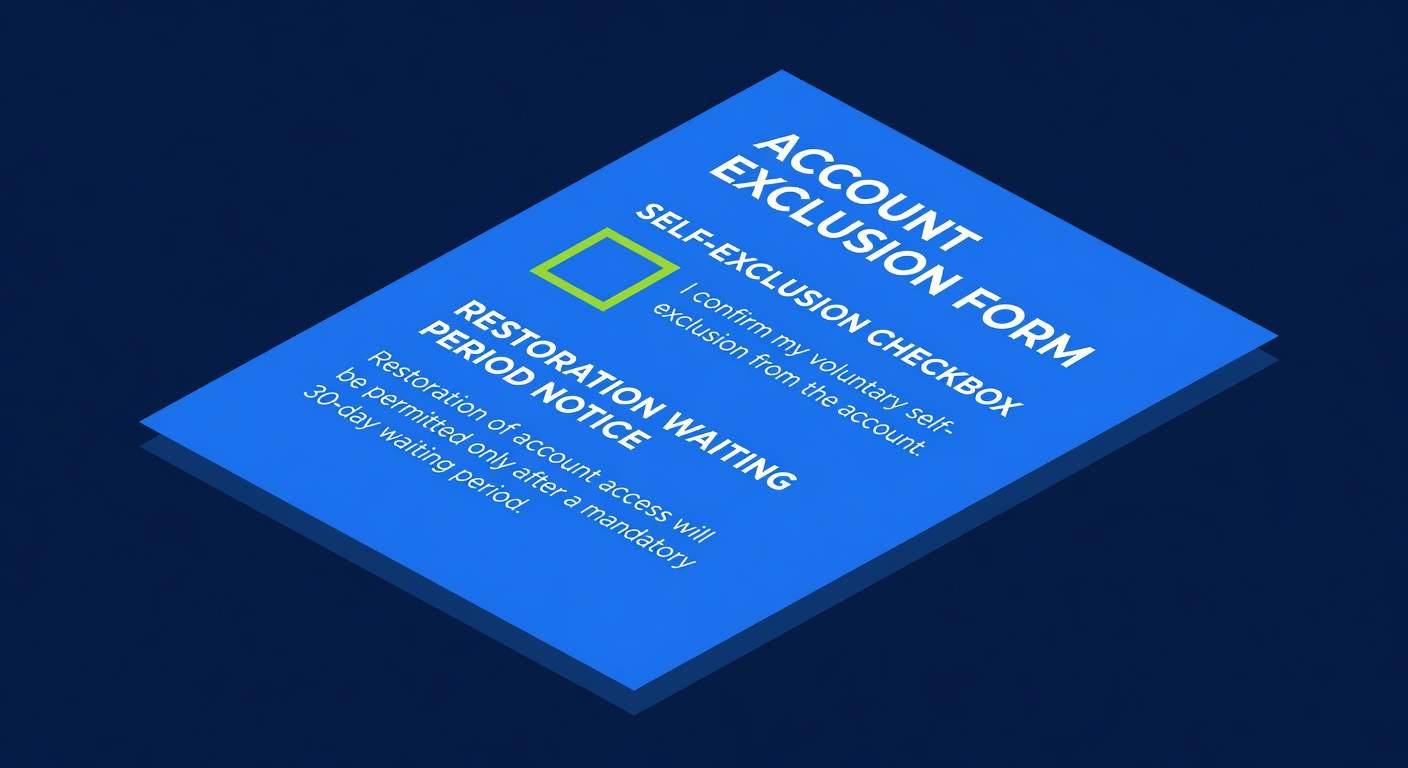
A self-exclusion program is remarkably simple. You sign a form. You are banned from a casino or a set of casinos. You attempt to enter. Security turns you away. That is the entire mechanism.
The effectiveness, measured by casino data, is surprisingly high for people who actually enroll. Problem gamblers who self-exclude reduce their gambling frequency by 80 percent. Some stop entirely. Some eventually return after the exclusion period expires, and the cycle repeats.
Nevada has had a self-exclusion program since 2007. The program allows players to ban themselves from all state casinos or from specific casinos. A player can enroll for six months, one year, or five years. The cost is zero dollars.
The simplicity masks a complex reality. A self-excluded player can often circumvent the ban by using someone else's ID or a fake name. Casino security is not biometric. It is based on name and photo matching. A disciplined person can evade this. An impulsive person, usually the person trying to self-exclude, cannot.
The program works best for people who are motivated to change their behavior and who can accept physical barriers. A person who thinks "I will never gamble again" and enrolls in self-exclusion has a reasonable chance of success. A person who thinks "I will gamble, but more responsibly" rarely benefits from self-exclusion.
Self-exclusion is a bet against your own future self. It usually loses.
Online gambling complicates self-exclusion. A player can ban themselves from a specific operator. But the player can open a new account with a different operator using a different email and payment method. The restrictions are account-level, not person-level, in most cases.
Some jurisdictions have multi-operator self-exclusion systems. The United Kingdom's GAMSTOP allows a player to ban themselves from all licensed UK operators simultaneously. The player receives a unique self-exclusion file that is checked during account registration. Attempting to open an account while self-excluded triggers immediate account closure.
Even GAMSTOP has been circumvented by players using VPNs to access unlicensed operators. The system works as designed but only for players who comply. The players most in need of protection are often the ones actively working around it.
The enrollment process is deliberately simple to reduce friction. A player in crisis does not want to fill out a twenty-page form. They want immediate action. Nevada's self-exclusion form is one page. The player signs, provides ID, and they are banned from all casinos that same day.
The implementation quality varies. Some casinos add the player name to a database that is checked at the door. Other casinos rely on staff recognition. A large casino cannot possibly recognize all self-excluded players by sight. The system is honored more in theory than in practice.
The expiration process is another vulnerability. A self-exclusion that expires after one year is useless if the person has not resolved the underlying problem. Many players use expiration as a restart date. One year passes. The self-exclusion ends. The player returns to the casino, expecting that a year of sobriety has cured the addiction. It usually has not.
The strongest self-exclusion programs require active renewal. Instead of expiring after one year, the ban persists until the player actively requests removal. This prevents the automatic restart cycle. Some jurisdictions have moved in this direction. Others still allow expiration by default.
For a serious problem gambler, self-exclusion is a tool that buys time. It is not a cure. The time purchased must be filled with actual treatment: therapy, medication for co-occurring depression, rebuilding financial stability. A self-excluded gambler who does nothing but wait for the ban to expire is likely to return with the same problems intact.