
Desk story / Crypto Gambling
Stablecoins in Online Gambling: USDT, USDC, and DAI Compared
USDT dominates gambling stablecoin deposits. USDC offers more transparency. DAI is theoretically better but least used. The reasons are mechanical and behavioral.
- Filed
- Byline
- Wes Callahan
- Length
- 888 words, about 4 minutes
- Copy ID
- SM365-6BE66945
The Core Function
Stablecoins solve a problem that volatile cryptocurrencies create: when you deposit Bitcoin and its value drops twenty percent while you are playing, your bankroll has shrunk without your consent. Stablecoins peg their value to fiat currency (usually the US dollar) to eliminate this variance.
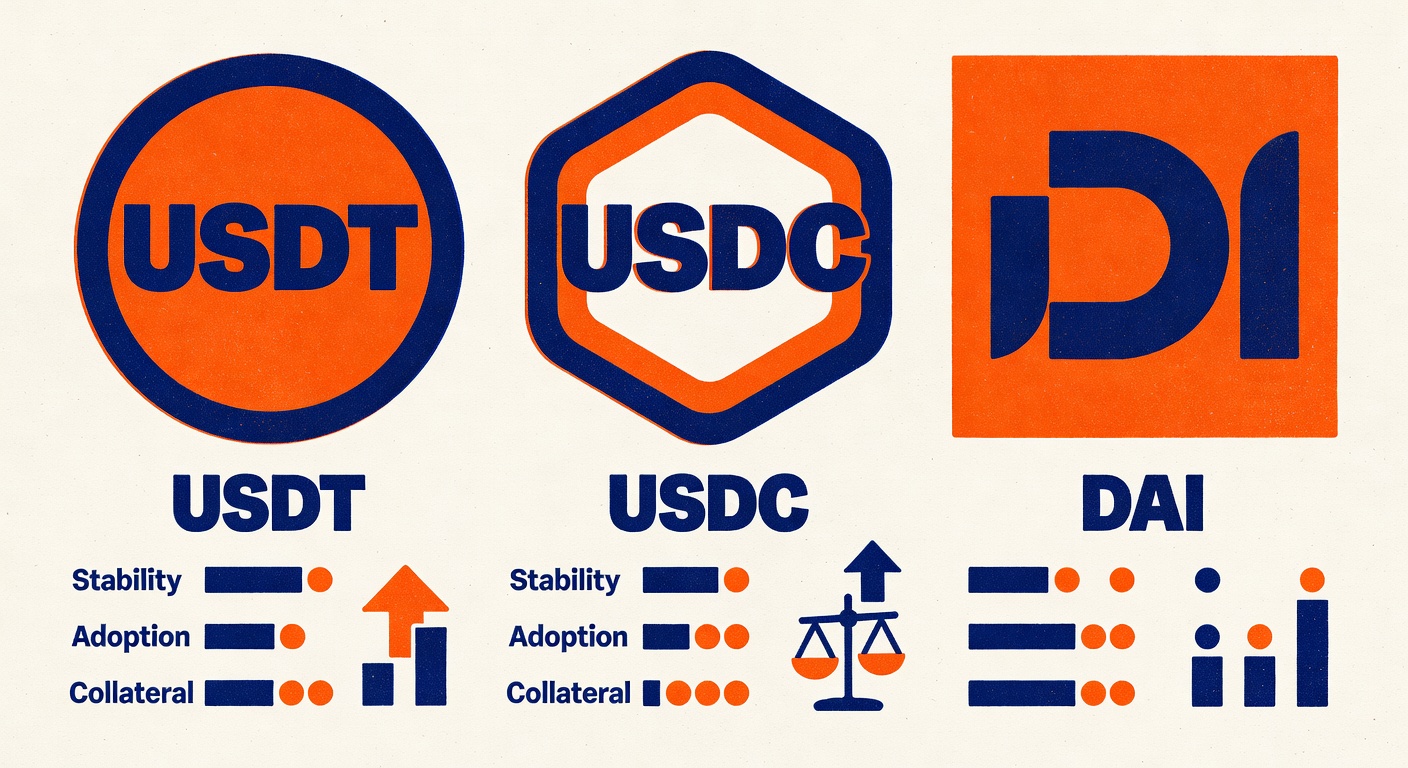
USDT (Tether), USDC (USD Coin), and DAI (Dai) are the three major stablecoins in gambling. Each maintains a one-dollar peg through different mechanisms. Understanding the differences requires understanding how each achieves stability.
USDT: Dominant Through Network Effects
Tether introduced USDT in 2014 and captured early-mover advantage. USDT exists on multiple blockchains: Ethereum, Tron, Polygon, Bitcoin (via Omni), and others. This multi-chain presence means any casino or exchange supporting stablecoins likely supports USDT, because multiple payment paths exist.
Tether maintains its peg through claimed one-to-one backing: each USDT token is backed by a dollar held in reserve. This claim has been controversial. In 2021, investigations by the New York State Attorney General revealed that Tether had not, at certain points in its history, held sufficient reserves to back all USDT in circulation. The peg survived, but credibility was damaged.
Despite this history, USDT represents roughly sixty percent of stablecoin gambling transaction volume, according to blockchain analysis. The reasons are network effects: it is accepted everywhere, it has deep liquidity, and most casinos have already integrated it. Switching away requires updating technical infrastructure.
USDC: The Transparent Alternative
USDC was launched in 2018 by Coinbase and Circle. The structure differs: USDC explicitly maintains a basket of dollar reserves and US Treasury bonds. These are audited and publicly disclosed monthly. USDC's reserves are more transparent than Tether's, which makes USDC theoretically more trustworthy.
USDC is accepted on Ethereum, Polygon, Arbitrum, Optimism, and other networks, but it maintains narrower blockchain support than USDT. Most major exchanges support USDC, but the number of casinos accepting it lags behind USDT adoption.
USDC transaction volumes in gambling are roughly twenty percent of USDT's volume. The currency works identically to USDT from the player perspective, but the reduced adoption means fewer deposit pathways and sometimes lower exchange liquidity on smaller exchanges that serve gambling markets.
DAI: Theoretically Sound But Practically Abandoned
DAI is the most interesting stablecoin technically. It is not backed by reserves held by a company. Instead, it is maintained through a decentralized protocol where users lock cryptocurrency as collateral and mint DAI against it. The stability mechanism is algorithmic and transparent.
DAI should theoretically be more trustworthy: no company can run away with your funds, no central reserves can be mysteriously depleted, no audit can be falsified. The mechanism is code. Code does not lie.
Yet DAI represents less than one percent of stablecoin gambling volumes. The reasons are practical: DAI trading fees are higher (the system must manage collateral and liquidations), DAI trades at slight discounts to the dollar on many exchanges (depeg risk), and most casinos never bothered to integrate it.
DAI is technically superior by several measures. But superior technology rarely wins in adoption battles when network effects favor inferior alternatives.
The Mechanism That Matters Most
From the gambler's perspective, the differences between these stablecoins are marginal. You deposit USDT or USDC or DAI at the casino. The casino converts it at the peg rate of one dollar. You play. You cash out. The casino converts back to stablecoin. The conversion fee is minimal (typically zero to 0.1 percent).
The hidden difference is in the liquidity that the casino must maintain to facilitate withdrawals. If a casino accepts primarily USDT, it builds USDT reserves. If a player requests a withdrawal in USDC, the casino must swap USDT for USDC on an exchange, which costs money (the spread, typically 0.01 to 0.05 percent of the transaction value).
Large casinos maintain reserves in all three to minimize conversion costs. Smaller casinos might support only USDT to simplify operations. This creates a scenario where USDT availability is universal, USDC availability is common, and DAI availability is rare.
The Future Pressure
Government regulation of stablecoins is tightening in the United States and Europe. Future regulations might restrict which stablecoins casinos can accept. If regulators demand that stablecoins maintain one hundred percent reserve backing (as they are moving toward), USDT and USDC will face pressure to prove compliance.
DAI would actually benefit from such regulation: the algorithmic backing mechanism is transparent and verifiable, which suits a regulatory regime that demands proof of reserve.
But regulatory adoption lags technology adoption, and technology adoption favors incumbents. USDT will likely remain dominant unless regulation explicitly prohibits it or unless Tether itself fails catastrophically.
The Practical Recommendation
If you are depositing stablecoins to a casino, check which ones are supported. USDT will be available at nearly every casino. USDC will be available at most major ones. DAI will be rare. The fee difference between them is typically under 0.1 percent of your stake, which is negligible compared to the house edge.
The more important question is whether stablecoins themselves make sense. They do, because they eliminate currency volatility. They are better than holding Bitcoin or Ethereum while playing, because at least your bankroll does not shrink due to price changes.
The stablecoin you deposit does not matter much. The fact that you convert back to fiat when you cash out matters more, because that conversion always carries a fee and a time cost.