
Desk story / Sports Betting
Uncut Gems: How Adam Sandler's Film Captured Betting Obsession
What does a person believe about the future when they are willing to bet everything on the outcome. Uncut Gems examines this through the character of a jeweler obsessed with a single stone.
- Filed
- Byline
- Cole Hastings
- Length
- 903 words, about 4 minutes
- Copy ID
- SM365-E4534B87
The Framework of the Question
One might ask: what is the difference between investing and gambling? The venture capitalist bets capital on a company that might fail, just as the bettor wagers on a game outcome. Both are risking money on an uncertain future. Yet we distinguish between them.
The distinction lies not in the mathematics but in the bettor's belief about their own knowledge. The investor believes they possess information that markets have not fully incorporated. The gambler knows they are guessing.
Adam Sandler's character, Howard Ratner, in the film "Uncut Gems," is neither investor nor gambler in the pure sense. He is an obsessionist, and obsession creates a third category: the person who believes in the future so intensely that they are willing to destroy the present to reach it.
The Stone As Symbol
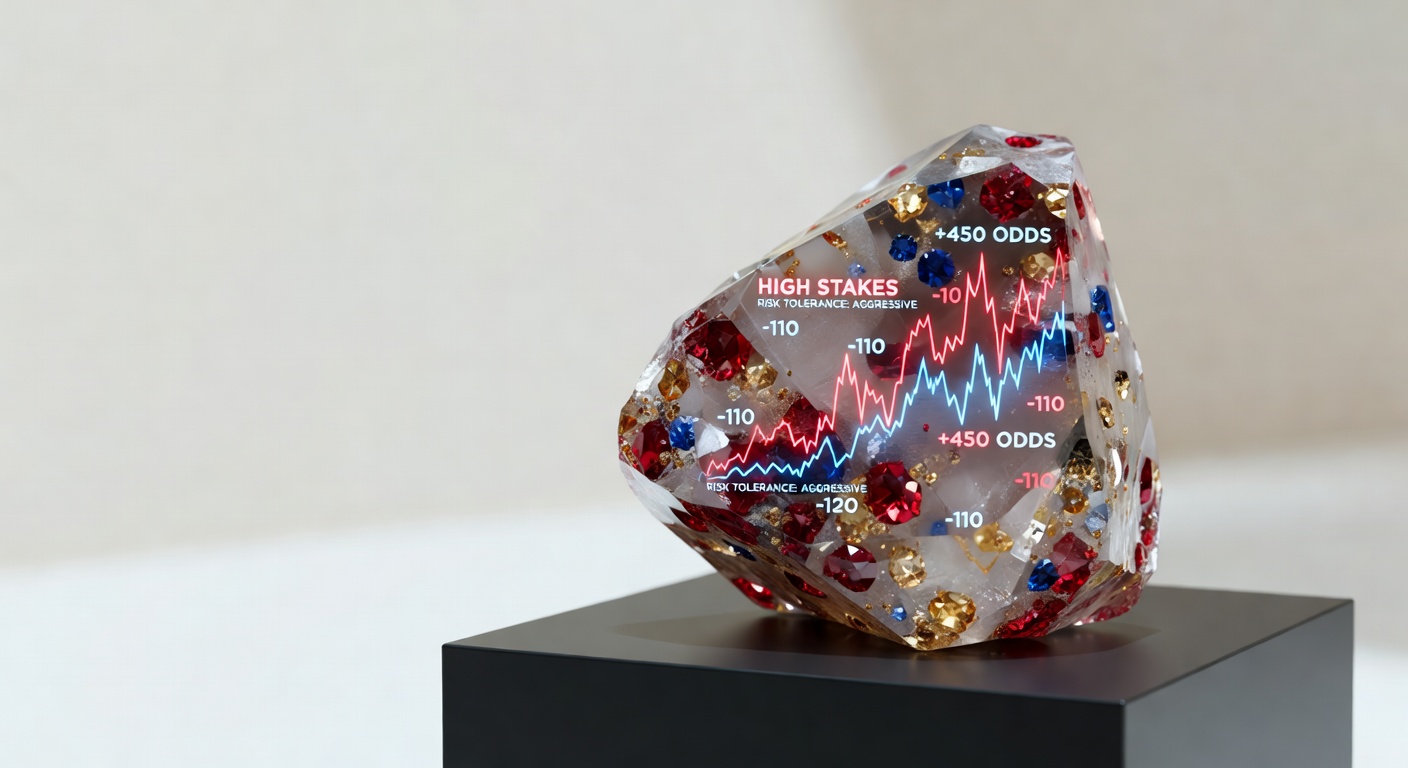
The plot hinges on a black opal that Howard acquires and becomes obsessed with. He borrows money to acquire it. He owes this money to dangerous people. He does not sell the stone. He holds it, waiting for its value to increase, waiting for the auction he believes will transform his fortunes.
The stone is worthless until it is sold. It has potential value but no actual value. This is true of every bet: the outcome has potential value but no actual value until the uncertainty resolves.
Why would someone hold a worthless stone while accumulating debt. Because they believe in a narrative about the future. The narrative is: the stone will be worth more than I owe. Therefore, I am not in debt; I am in position.
This is the psychological reframe that allows obsession to masquerade as strategy.
The Conflation of Desire and Probability
Howard wants the stone to be valuable. He wants the auction to produce a price that exceeds his debts. This desire is so intense that he begins to treat it as probable. The two become indistinguishable in his mind.
This is ordinary human cognition. We are terrible at estimating probabilities. We conflate desire (I want X) with likelihood (X is likely). Sandler's character simply demonstrates this at extreme intensity.
When someone bets their house, they typically believe (in some recess of their mind where they have not examined the belief closely) that they know something others do not know. They have an edge. The market is wrong. Their judgment is special.
Howard believes he and only he can see the stone's true value. No one else understands it. When he finally presents it at auction, the world will recognize what he already knows.
The humility to say "I might be wrong" never arrives.
The Compression of Time
What makes the film unbearable is the pacing. Sandler moves through debt accumulation, evasion, temporary relief, and deeper debt with a rhythm that mirrors obsessive thought itself. You never rest. The plot does not breathe. Neither does Howard.
This is what betting obsession feels like subjectively. Time compresses. The future becomes immediately necessary. You need the outcome now, not eventually. This creates the pressure that drives escalation.
Howard borrows more to cover the first loan. He takes more risks to cover the second loan. Each action is rational in the moment (the only way to cover what I owe is to risk what I have), but the sequence is irrational. It leads to the inevitable ending.
The Final Question
The film concludes with Howard's death, but not the death you might expect. He does not lose everything and go broke. He dies with violence, suddenly, before the narrative his obsession constructed reaches its conclusion.
This is more honest than the typical ending where the obsessionist loses everything and learns a lesson. In reality, obsessives die or stop before the lesson arrives. They do not reach the moment of perfect clarity. They reach a moment of perfect loss.
The question the film asks is: what does it mean to be so convinced of a future that you are willing to destroy your present to reach it. Is this madness. Is this hope. Is it the same thing.
A person in thrall to gambling often genuinely believes they will win. They are not in denial. They believe. This belief is what makes addiction so intractable: the addicted are not choosing irrationally from their perspective. They are choosing rationally based on their (incorrect) estimate of the outcome.
What Uncut Gems Does Better Than Other Gambling Films
Most gambling films end with redemption or catastrophe, and the protagonist learns from it. "Uncut Gems" ends with death, and we never see if the protagonist would have learned anything.
This is closer to truth. Many obsessives never reach the learning moment. They continue until external forces (death, legal action, abandonment by loved ones) stop them. The moment of insight does not arrive because the obsession is not a rational position that can be reasoned out of. It is a belief so deep it is protected from rational examination.
Sandler's performance communicates this through the entire film: a man who is always in the next moment, waiting for it to arrive, unable to inhabit the current moment because the future is where he lives.
The film's insight is not that gambling is bad. The insight is that obsession creates a belief so strong that the obsessed person is no longer gambling in the rational sense. They are living in a narrative they have constructed and defending it with everything they have.