
Desk story / Blackjack
The Psychology Behind Why Players Deviate From Optimal Strategy
You walk into the casino, the lights hit you, and you are alive in a way you are not anywhere else. You know the strategy. You know what to do. And then you do something else entirely.
- Filed
- Byline
- Bri Sutton
- Length
- 630 words, about 3 minutes
- Copy ID
- SM365-666B19B2
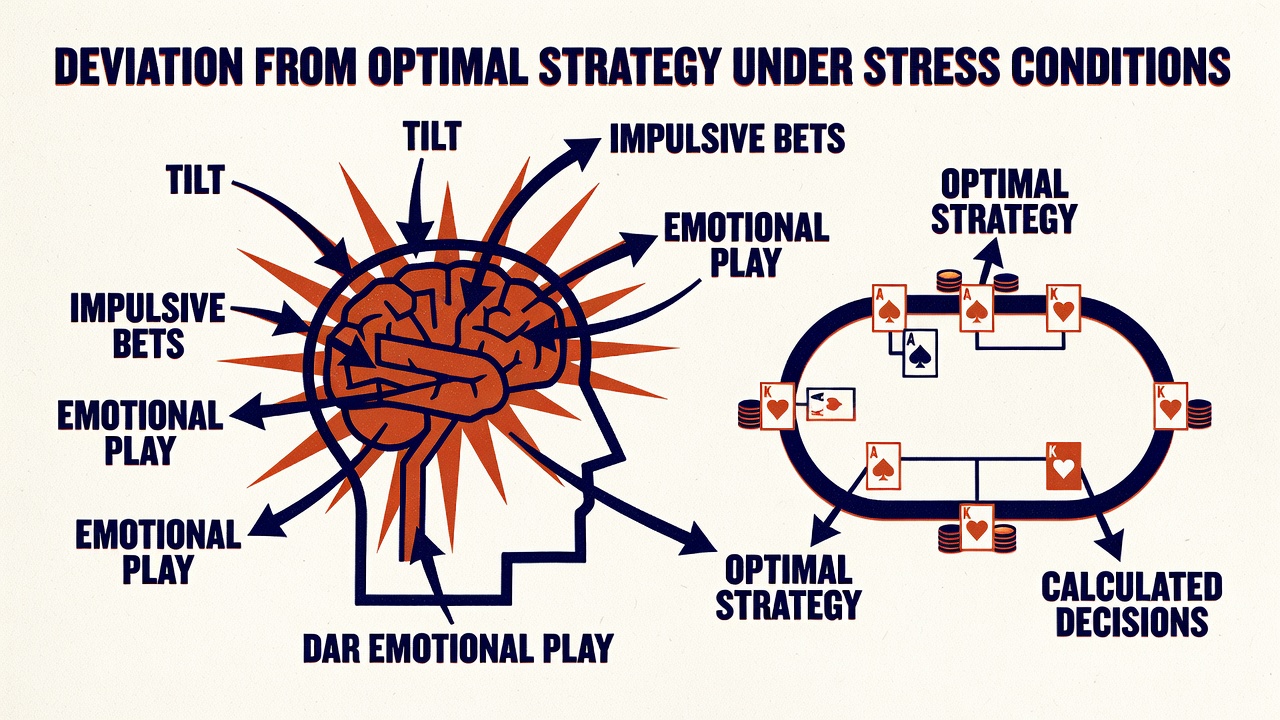
You walk into the casino, the lights hit you, and you are alive in a way you are not anywhere else. The sensory experience is overwhelming. You know the strategy. You know what to do. And then you do something else entirely because the moment overwhelms the preparation.
Optimal strategy exists in blackjack, poker, sports betting, and roulette. The strategy is mathematical. Follow it and you lose less over time than players who do not. It is simple algebra.
But humans deviate. A blackjack player knows to hit hard 12 against a dealer 6. But they feel like the next card will be a face card. They stand. They lose. They knew what to do and did something else. The emotion overrode the knowledge.
Why does this happen. Because optimal strategy is boring. Optimal strategy is mechanical. Optimal strategy removes the human element. A player wants to feel like they made a decision, not like they followed a script. Agency matters.
Standing on hard 12 against a dealer 6 feels like a decision. It feels like a play. Hitting according to the chart feels like letting the chart decide. The illusion of agency is worth the money it costs. The player values the feeling of control.
Why do you deviate. Let me count the reasons. Because you want to feel clever. Because you want to feel like you outsmarted the other players. Because the emotion of the moment overwhelms the logic of the hour before. Because you are tired. Because you are angry.
A poker player with a tight, aggressive strategy suddenly loosens because they are tired or bored or angry. The deviation costs money in expectation. The deviation feels necessary in the moment. The emotion overrides the calculation.
The Gap Between Theory and Practice
Optimal strategy is intellectually optimal but emotionally unsatisfying. Humans choose emotional satisfaction even when the cost is measurable and clear.
Sports bettors deviate constantly. They know the bet is bad. The line is wrong. They know this. They place the bet anyway because the game is happening now and the emotion of the moment is overwhelming. Impulse defeats analysis.
This is the gap between theoretical play and actual play. Theoretical play is what you would do with unlimited time and perfect information and no emotions. Actual play is what you do when you are tired, scared, excited, or drunk. The gap is where casinos make their money.
The best players narrow this gap through discipline. They force themselves to follow the strategy even when emotion screams otherwise. The players who cannot narrow this gap lose more money than they should.
Accepting deviation as inevitable is the path to controlling it. Recognize that you will deviate. Accept that you will lose money from deviation. Plan for it. Set aside money for the emotion. Protect the core bankroll with discipline.
Additional Perspective
The topic of the psychology behind why players deviate from optimal strategy remains relevant in the modern gambling landscape. Understanding these nuances helps both players and operators navigate the industry more effectively. The strategies and insights discussed above represent the accumulated knowledge of years of observation and analysis in the field. Players who take time to understand these mechanisms will make better decisions about their gambling activities and will be less susceptible to manipulation or poor decision-making under pressure.
The key takeaway is that knowledge is power. When you understand how systems work, you gain the ability to make informed choices. This applies whether you are a casual player looking to have fun responsibly or a serious player trying to gain an edge in competitive games. The information provided here is meant to educate and inform, allowing you to approach gambling with your eyes open to both the opportunities and the risks involved.